State of the Little House 101: “Independence”
We see, at ground level, a girl in a brown, brimmed hat, lying flat in the grass as a girl says (in voiceover) Once upon a time…
We next see a rabbit, seated in tall prairie grass. Cut to the girl getting a slingshot ready. Cut back to the rabbit, who looks to be a goner. But then we hear another girl’s voice: “Laura!”
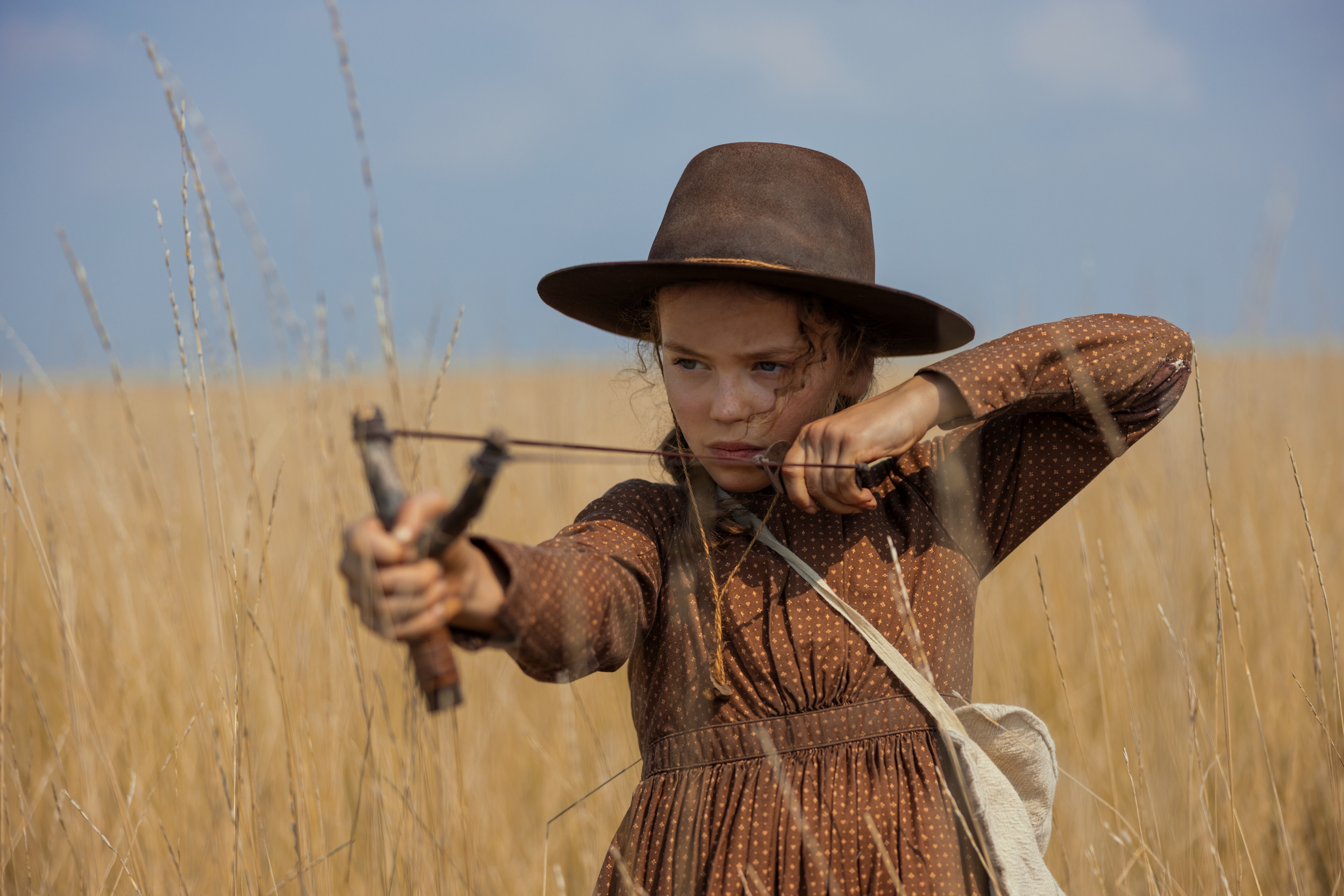
The spooked rabbit takes off, unharmed, before the shot from “Laura” lands. She slumps against the ground in irritation before getting up and giving the other girl (who we’ll soon know as “Mary”) the business: “Do you want dinner or not?”
To someone unfamiliar with the LITTLE HOUSE book series by Laura Ingalls Wilder, who’s watching the pilot episode of Netflix’s 2026 adaptation perhaps to see what all the fuss is about, here’s what they learn from that opening sequence:
There’s a girl here, familiar enough with the outdoors to be lying in the tall grass near rabbits.
The girl is trying to “get” a rabbit via slingshot.
Another girl is effectively ruining her efforts.
To someone very familiar with the book series, it’s more like this:
Wait, I only remember Laura watching rabbits (and other animals)-- not hunting them!
Why isn’t Laura’s sunbonnet hanging down her back? What’s with the hat?
But also…
Sounds like Mary’s being bossy from day one… and Laura is feisty and rebellious… Hey! I know them!
If all that reads as if I’m on my way to shredding these first 8 episodes of the all-new adaptation of Little House on the Prairie, guess again. I simply find myself with the most interesting of challenges.
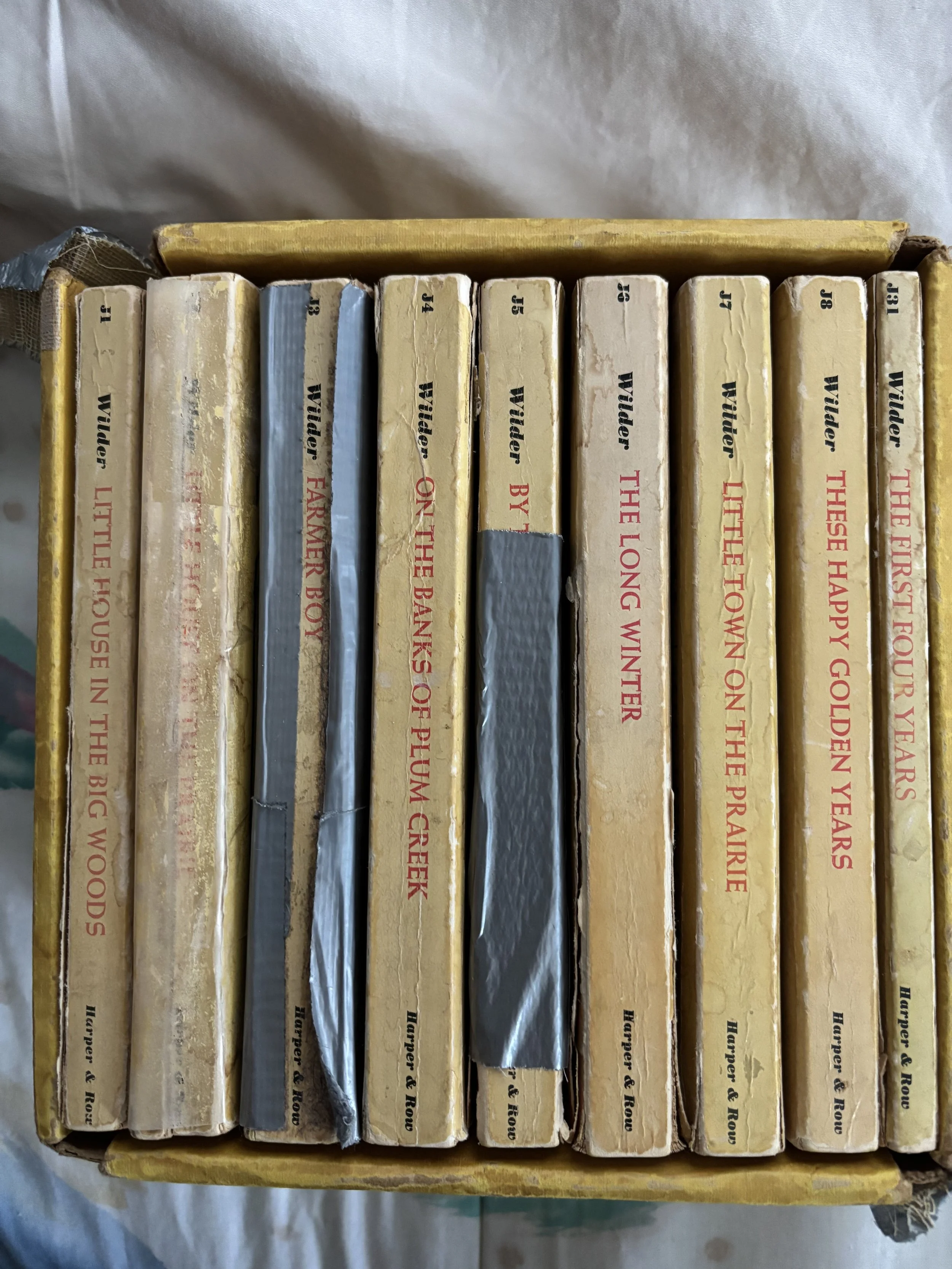
It’s the kind of challenge that comes from knowing the Laura Ingalls Wilder books like the backs of “Ma’s” gentle but strong hands, and continues to learn of Wilder’s world through the ever-growing wealth of supplemental literature…
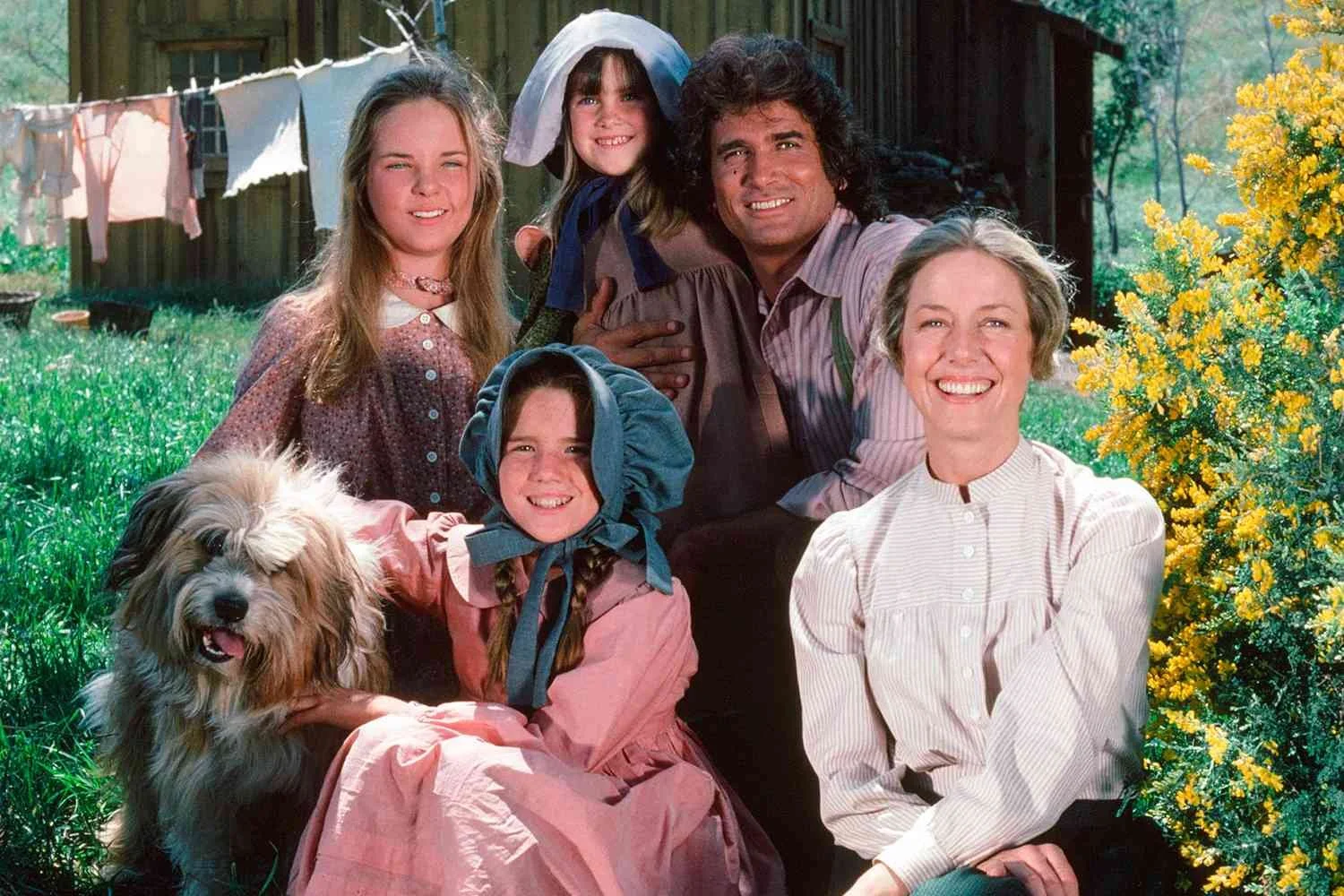
…while also being something of a fan of the long-running NBC TV series.
(Not all the book fans are.)
And for those who weren’t into the TV series because it was so loosely based on the books that it might as well have been the cutter tooth that fell out of Pa’s hay mower in The Long Winter– believe me, I get it. When the episodes focused on actual book events– Mary’s blindness, Laura and Almanzo’s courtship– I was frustrated with every stray from “the book version” (in other words, most of the time). And when episodes focused on anyone other than the Ingalls themselves (which happened much of the time, if not most, as the series progressed), I tended to ignore them altogether.
So when word got out early in 2025 that Netflix had officially ordered this all-new version, my Laura-infused brain spat out one question immediately–
How much will they follow the books?
– and then two others in quick succession…
Will they bring in too many “unknown” characters?
Might real events in the Ingalls’ family life– things that have been discovered and shared via Pioneer Girl and other recent publications– find their way into this adaptation?
I was gonna watch and find out, no question. But I was gonna watch as
A lifelong aficionado of the books
A burgeoning student of Ingalls & Wilder-related studies
Someone with a TV producer mindset, as that’s where much of my career has been centered
Oh– and this is important– I’m not much of a binge-watcher. So while Netflix dropped 8 episodes of LHOP all at once on July 9, 2026, I plan to watch, at most, just one episode a week. Blame it on my youth… which was set squarely in the 1970s and 80s, when big network TV was king.
Consequently, I’ll likely be watching these first episodes with new eyes all the way into the fall of ‘26. And as I work around other commitments to write about these episodes, I may complete only one episodic recap a month. But they will be thorough ones! You can bet your corn dodger on that!
🌾🌾🌾
Let’s get started…
Episode 101: “Independence”
Writer: Rebecca Sonnenshine
Director: Sarah Adina Smith
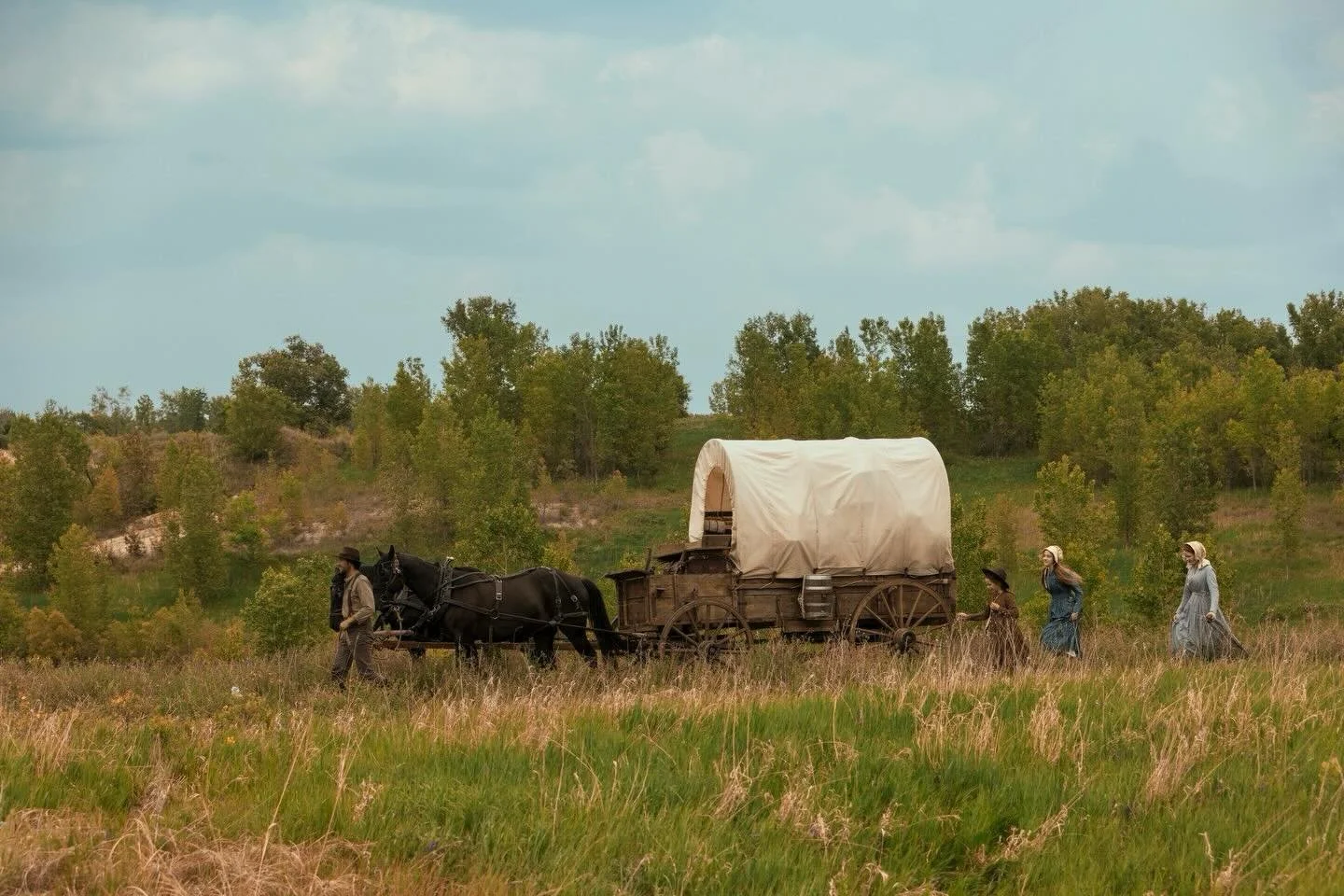
Summary: A week or so in the new life of the Ingalls family shows Pa, Ma, Mary, Laura, and their dog Jack in the final days of their journey by covered wagon from Wisconsin to Kansas, where the purported promise of “Free Land” awaits them. After surviving a terrifying river crossing that ruins most of their remaining food supply and (temporarily) seems to claim Jack’s life, they visit Independence, Kansas and get some guidance towards the part of the prairie on which they’ll settle.
Starting from scratch proves very difficult work– particularly for Ma, who injures her foot while lifting logs with Pa. It’s also revealed that she is pregnant. Neither Ma nor Mary is happy that the four of them left Wisconsin for the “middle of nowhere,” but Laura is excited for what’s to come, and Ma yearns to believe in Pa’s dream. So the plans for the house go forward… even though Pa quietly harbors his own doubts about the choice he’s made.
My thoughts on “Independence” in under 100 words:
I think LHOP ‘26 is off to a good start. They appear to be taking key elements from the book, stitching them together with their own ideas, and even bringing in and/or expanding a few historical components to give the viewers a promising patchwork quilt of a retelling. Some of the more surprising storytelling choices are refreshing, some are curious, and a few are flat-out unbelievable. But as a longtime devotee of the Little House book series, I’m by and large impressed with this debut episode.
🌾🌾🌾
NOW… If you’re here for the longer, more detailed analysis, you’ll see that I break each episode down in three different ways:
STRAIGHT FROM “THE PRAIRIE”
(aka the Little House On The Prairie book source... the most accurate depictions to the most unique detours, and everything in between)
SHOWRUNNER CREATIONS
(The best elements/characters invented by producer/director Rebecca Sonnenshine)
HEADSCRATCHERS
(specific events in the episode that prompted a Wait, WHAT? reaction)
STRAIGHT FROM “THE PRAIRIE”…
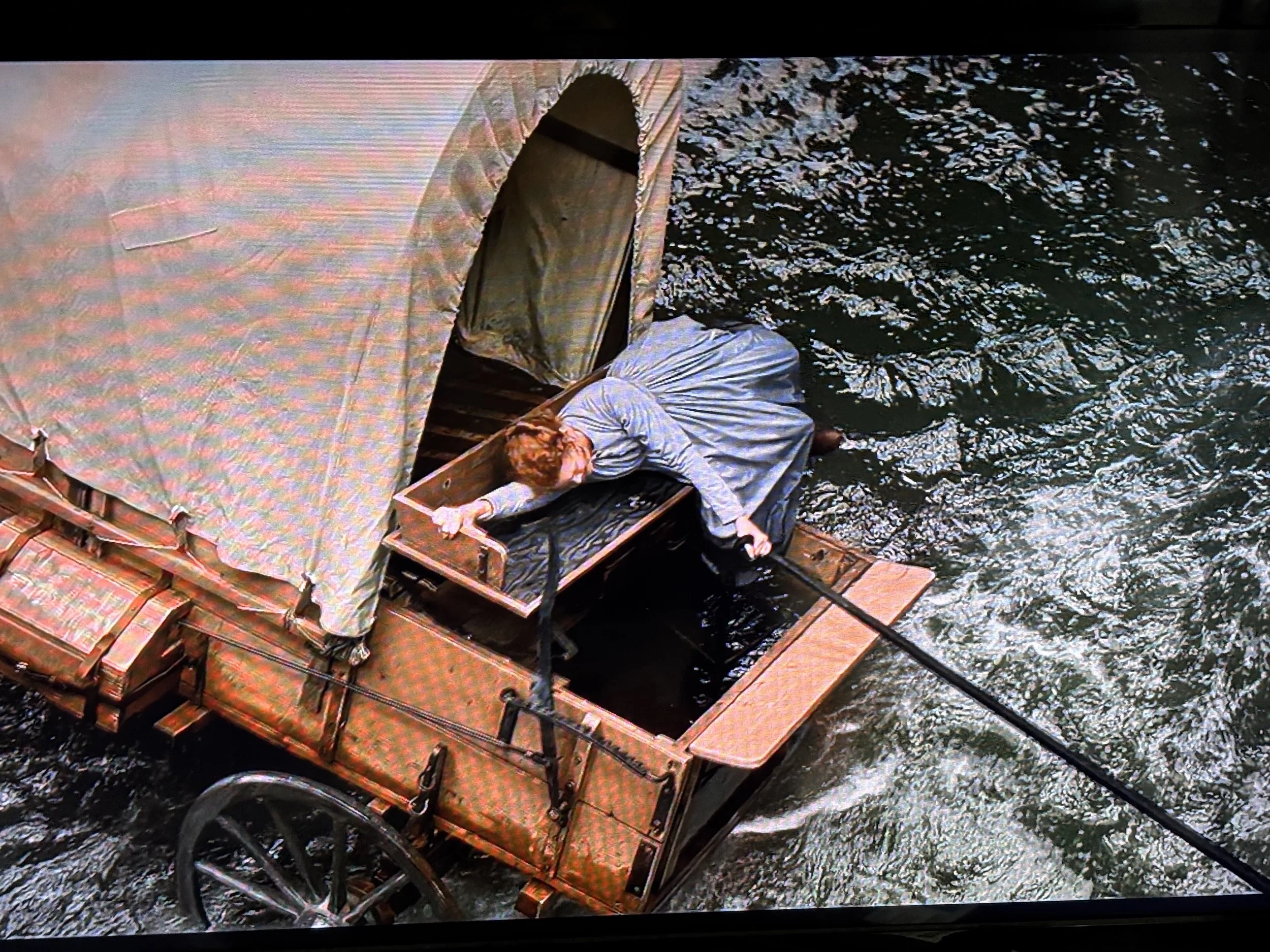
BEST– Crossing the river
Netflix created a social media post showing the way the LHOP book– and particularly Garth Williams’ masterful illustrations– greatly informed the way this event was captured for the series. And indeed, the “crossing” was a tremendous sequence. The underwater footage as the team of horses struggled for their footing was compelling… the anguish of seeing Pa (and then Jack*) plunge into the raging river to assist the team… Ma’s stiff-arming and “Laura, stay back!” when she instinctively rushed to the front of the wagon (I felt that one especially)... wow!
*In the book, Jack was not invited to ride in the wagon because Pa– underestimating the power of the river– said he was fine to swim it. In the book AND the Netflix version, Jack subsequently disappears for a time before catching up to the Ingalls family.
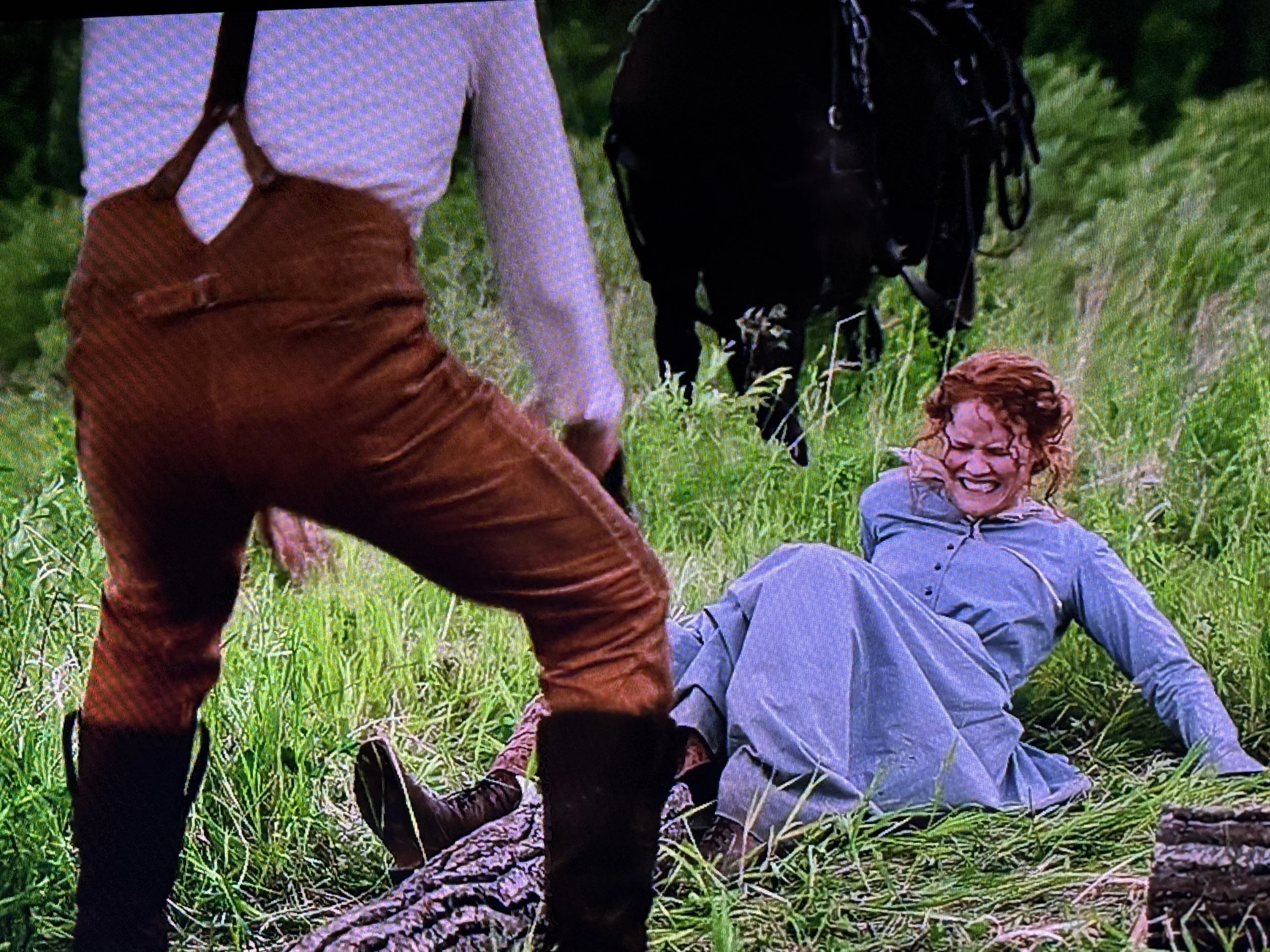
NEXT BEST – Ma’s foot injury
Watching the premiere episode of LHOP prompted me to rifle through the book and come up with a list of 20 major plot points that, ideally, will be covered in some fashion within this season. Ma’s foot getting crushed by a log was a no-brainer. There was plenty of foreshadowing as to how incredibly heavy those logs were; we saw Ma and even young Laura help in loading them onto the wagon (though I’m not sure Pa would have allowed Laura’s assistance, nor certain she could’ve helped much anyway). Still, just thinking about Wilder’s original description had me anticipating the incident with a fair amount of dread.
Yes, they took some liberties. For one thing– Ma and Pa were merely carrying the log in the episode, not trying to lift it into place. For another, the injury was more severe (a bone break; we all heard it 😦) and required more urgent medical care. Pa declared “no bones broken, just a bad sprain” in the book.
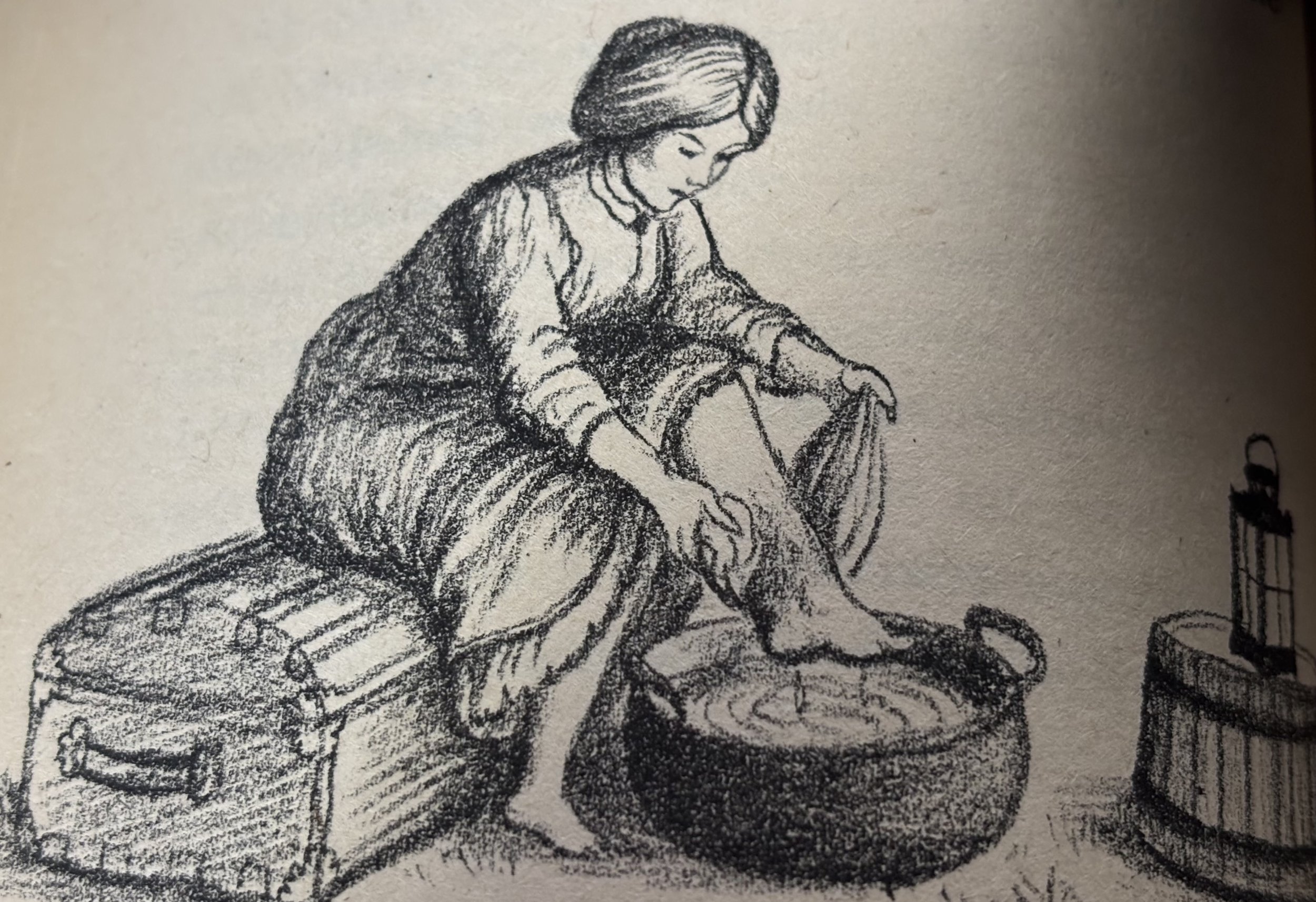
(More like a Godawful sprain, to look at Garth Williams’ illustration of it…)
But what I liked so much about this part of the episode was not just that it was truly based on the book, but the way they used the injury to forward the narrative in a few ways…
It gave Dr. Tann not only the job of treating Ma, but introducing the news of Ma’s pregnancy (which was subsequently discussed for the first time by Charles and Caroline)*.
It provided Dr. Tann with another opportunity to warn Pa about trying to “do it out here all alone” and point him in the direction of Mr. Edwards.
While Pa was off fetching Dr. Tann, Ma and the girls reminisced about the Wisconsin Big Woods days, underscoring how much Ma and Mary missed them.
No, none of that happened in the book. But considering that the original narrative had Ma caring for her foot by soaking it in the hottest water she could stand (!!!)... yep, I’d have changed it too.
* REAL-LIFE LAURA fact: Carrie (the third of the four sisters) was born in Kansas in August, 1870… a fact they seem to be adhering to in the Netflix LHOP.
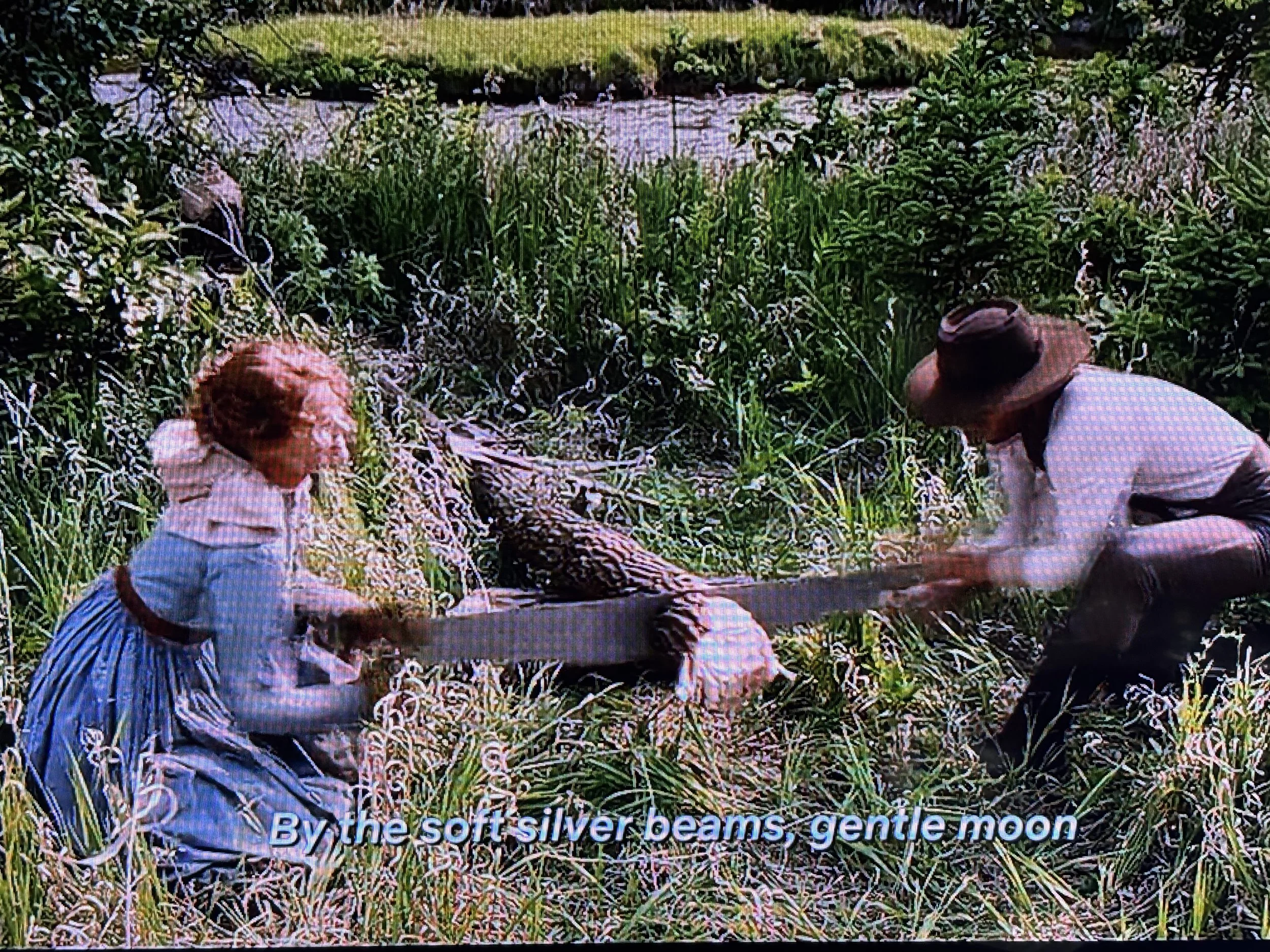
PRETTY GOOD– LOG CABIN-BUILDING 101
A significant portion of the LHOP book (at least 6 of 26 chapters) is devoted to the detailed construction of said LH… a time and energy-consuming process that helps underscore the disappointment of (spoiler alert) being forced to leave it all behind at the book’s conclusion*.
Since the action in Netflix’s LHOP would drag if they “stuck to the books” for this part– I’ll admit, even I now skim through the chapters on door and floor-building– they utilized good ol’ music montages in this first episode. So they still show the steps (chopping and hauling logs, digging trenches for the foundation, hewing out the log ends), but they do it efficiently. I’m pleased with that so far, but also curious to see how it’s handled in subsequent episodes this season.
*All the hopes and dreams Pa had for himself and his family didn’t change the fact that the Ingallses were, knowingly or otherwise, “squatting” on the Osage Indian Reservation during their real-life time in Kansas (1869-70).
As for the parts of “Independence” that were “based on” something in the book but spun in a whole new direction:
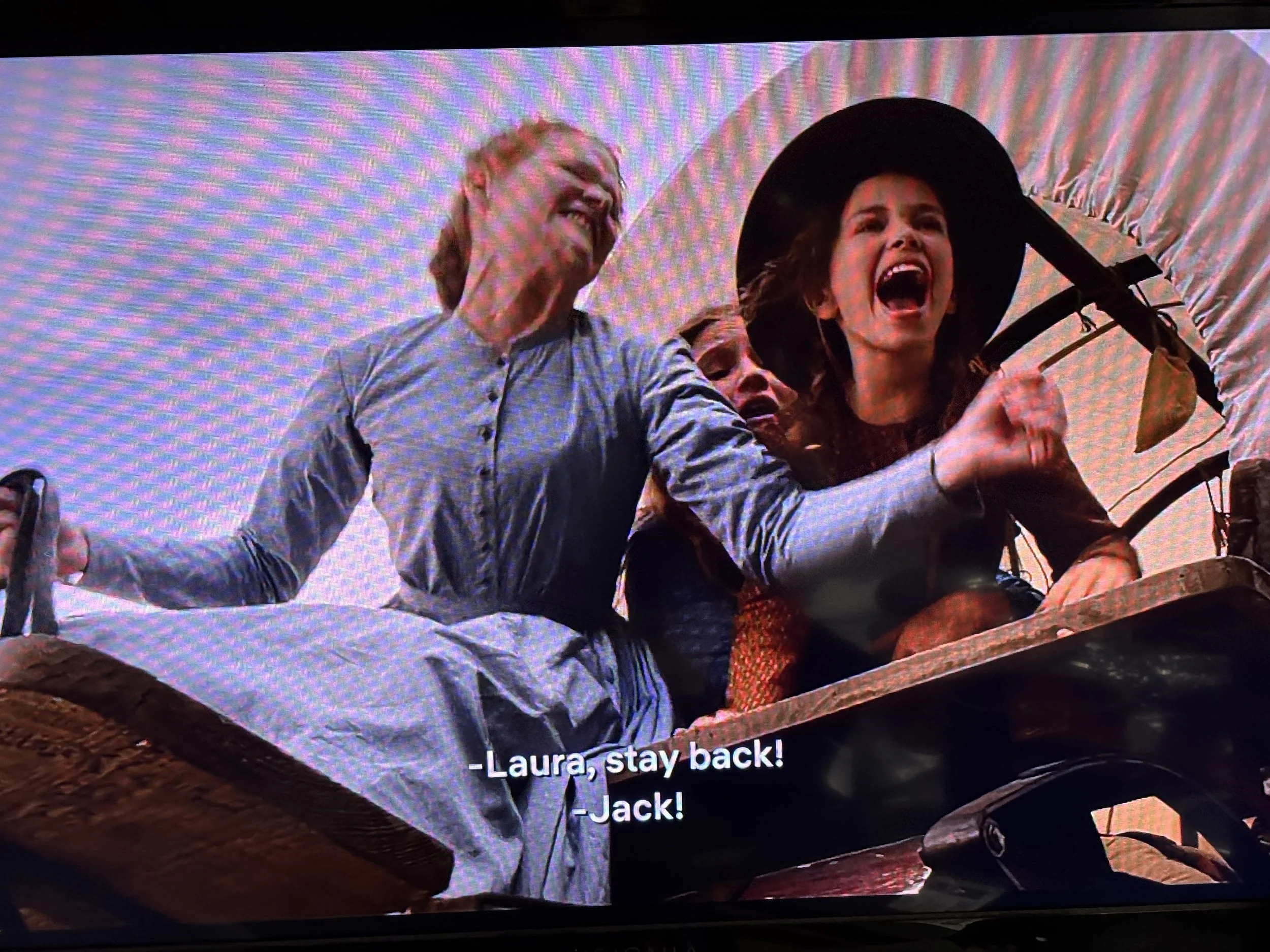
JACK’S DISAPPEARANCE
That’s the “base” here– the fact that Jack could not be found once the Ingalls family crossed that treacherous river. Here’s how it differed from the book:
Pa didn’t let the dog ride in the wagon, whereas Netflix Pa said “just this once.”
Therefore, there was no Jack-leaping-in-after-Pa in the book.
Jack returned a night or two later, initially scaring the family so much that Pa pointed his rifle at him. (Netflix Jack returned several days later, followed by Mr. Edwards… and Pa was concerned enough for his family’s safety that he pointed his rifle at Edwards!
Jack’s disappearance, though, ends up being much more than just a plot point. It’s also a reinforcer of Ma’s skepticism (telling Laura he wouldn’t be back) and Pa’s regret, once he, too, joins Laura in wondering if/when Jack will return. But it also spurs Pa’s never-lose-hope mindset.
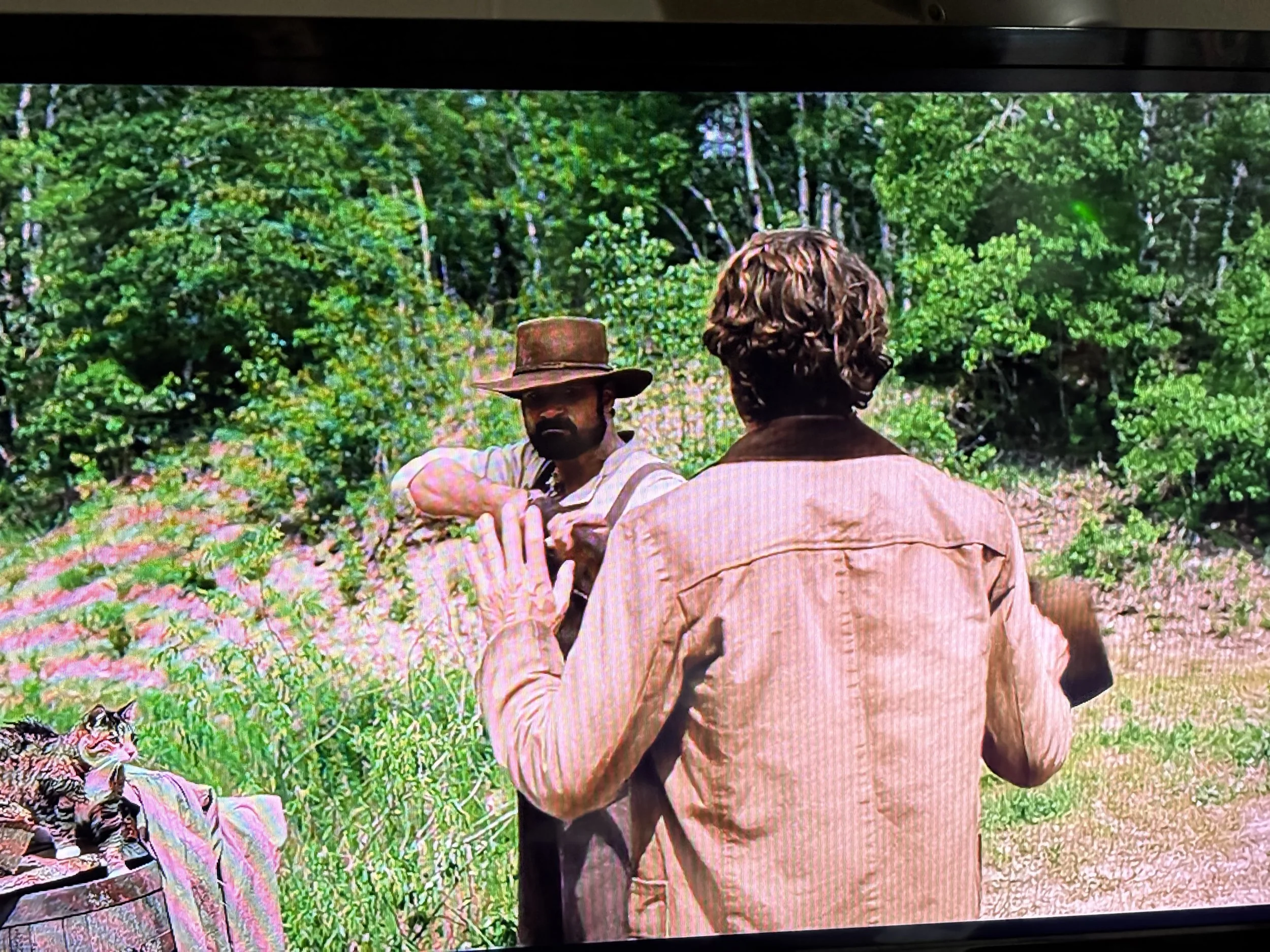
SPEAKING OF EDWARDS…
In the book, there was a Mr. Edwards (no first name given)– a lean, tall, brown, tobacco juice-spitting, wildcat bachelor from Tennessee who traded work with Pa to finish building the log cabin.
Then, in the NBC series, there was a Mr. Elijah Edwards who was bearded, pot-bellied, and eventually revealed a sorrowful backstory on his way to controlling his drinking and becoming a mostly-jovial sidekick to the Ingalls family.
In the Netflix adaptation, we have a Mr. John Edwards who is bearded, of strong build, and states in the pilot that he’s from Tennessee… but there is evidence to suggest he, too, has a difficult past. (A Civil War-era photo of Edwards with a wife and daughters that literally “triggers” him to pull his rifle on an alarmed Charles when the latter mentions it.) By the end of the episode, Edwards opens up just a little, all is forgiven, and house-raising plans fall into place.
How do we feel about this “darker” Mr. Edwards? I’ll admit (especially after watching the “Old Dan Tucker”-singing Edwards on NBC for so long) that it took me by surprise. But the story of the “real” Edwards is quite difficult to pin down– researchers have, at best, narrowed it down to two different bachelor neighbors of the Ingalls family, and neither of them was from Tennessee! So we’re making our comparisons to the composite Mr. Edwards created for the books… or, for now, the way in which he’s introduced in the pilot.
My take? Given that this is one of several “new” backstories created for the Netflix version (see below)-- and that I really want to get behind this project– I’m keeping an open mind. Bring it, Mr. hard-working, cat-loving, enigmatic Edwards.
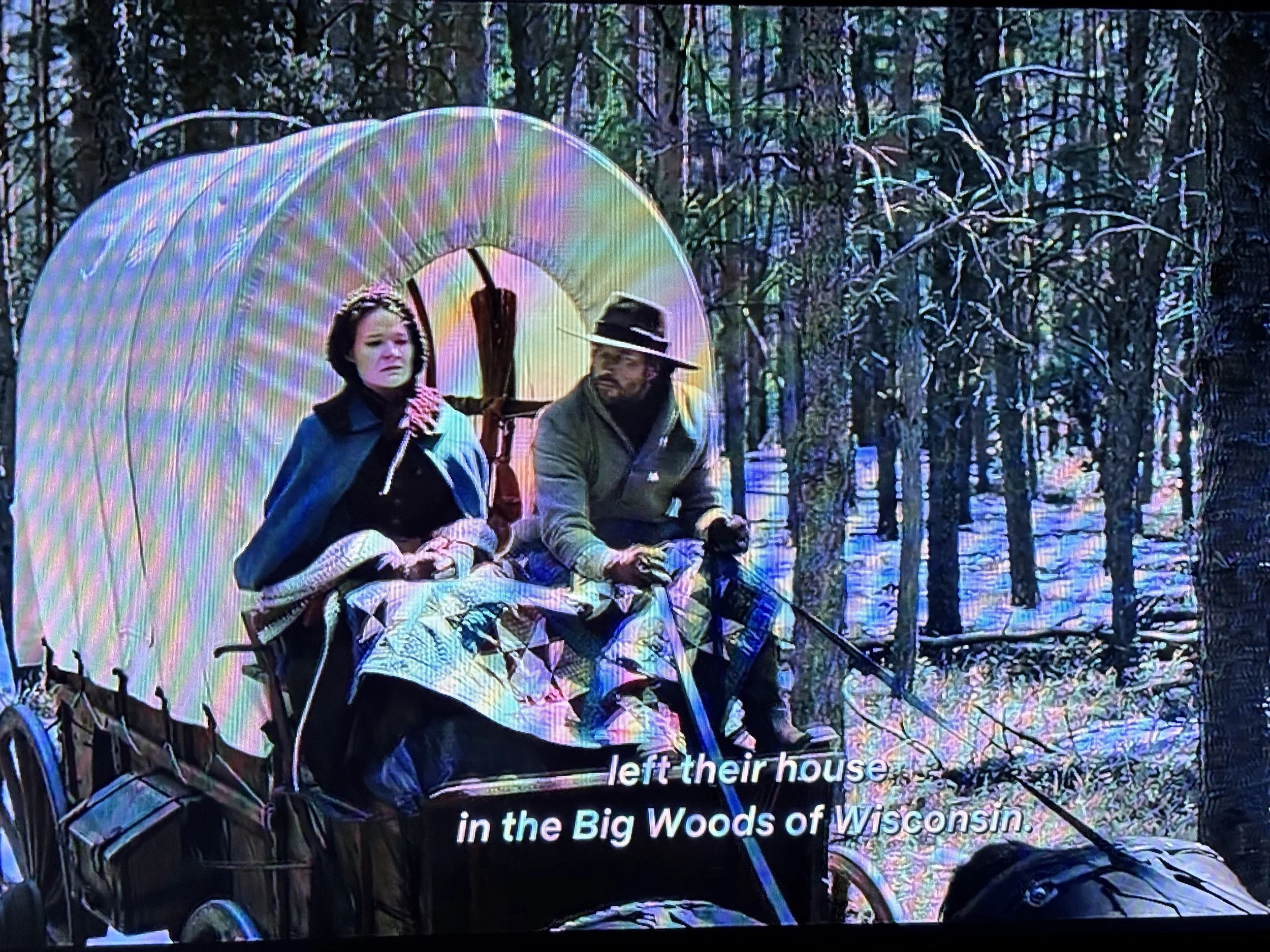
BIG WOODS BROUHAHA
Laura’s narration in the early part of “Independence” tells us that the family left the Big Woods of Wisconsin because they’d become too crowded, and hunting had become poor, for Pa, as a result. But do Charles and Caroline have their own version of “why”? They certainly have a way with the cryptic comments…
“It didn’t work out.” (Charles)
“My sister says I was a fool to leave everything behind and follow you into the dark.” (Caroline)
“I should’ve known better… about a lot of things.” (Charles)
‘There’s no going back. Not after everything that happened.” (Caroline)
Ooookay, so it’s being suggested that while Laura and Mary were told a few reasons for the big move, there was much more to the story. WAS there much more? No, not as I understand it. In real life, the Ingalls family returned to their Wisconsin log cabin when (they had to leave their Kansas cabin behind/when the man who bought their first home reneged on his mortgage payments NEED TO CHECK). Is that how the Netflix LHOP ends the season? Or do they leave it more open-ended, as the book does? (Those are rhetorical questions; please don’t tell me, I haven’t watched it yet)
How much they need to fill the viewers in on these things depends, quite literally, on what direction she intends to take the Ingalls from “the prairie”!
🌾🌾🌾
SHOWRUNNER CREATIONS…
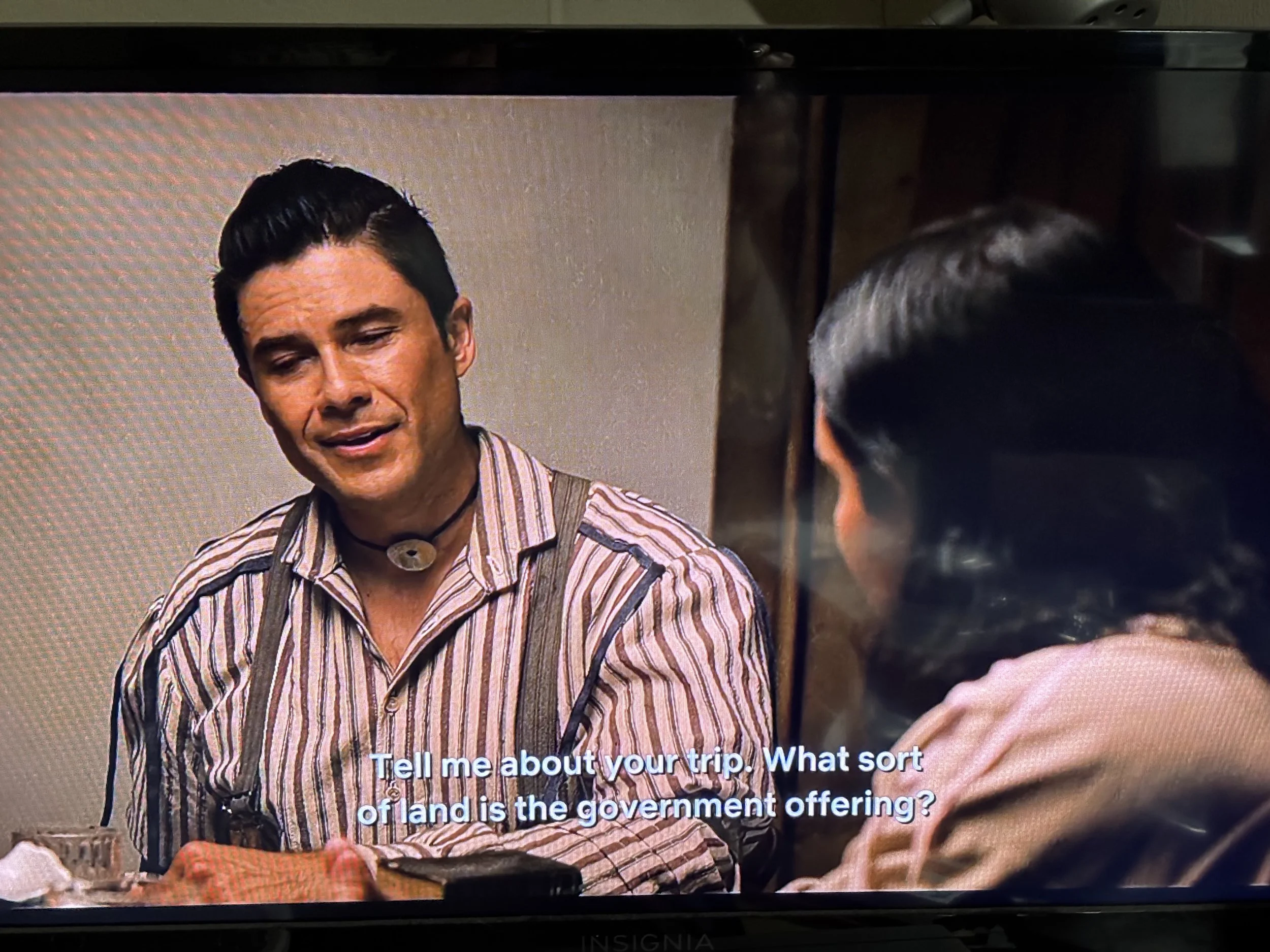
BEST– The Mitchells
There’s the book version of “indians”-- mostly frightening, as seen through young Laura’s eyes when they enter the house uninvited and leave with the Ingalls’ food– and then there’s the Netflix Native Americans known as The Mitchells. Decidedly different? Yes… but in a very good and necessary way. (The term “Native Americans” wasn’t even coined until the 1970s, after all.)
The core of the Mitchell family feels like a blend of careful adaptivity (William) and wary devotion (his wife White Sun), along with a daughter (Good Eagle) who is particularly enamored with her father. It sounds more than a little like the Charles/Caroline/Laura dynamic within the Ingalls family, and that’s the point, as Shonnenshine explained in this article.
The Mitchells’ POV represents that which Wilder could not include in LHOP, but feels as vital to the Netflix version as the prairie setting itself.
The above article also details Shonnenshine’s impressive steps of not only casting modern-day Native Americans (from tribes in both the U.S. and Canada) in the roles, but striving for accuracy with the 1870s Osage wardrobe. Who can find fault with that?
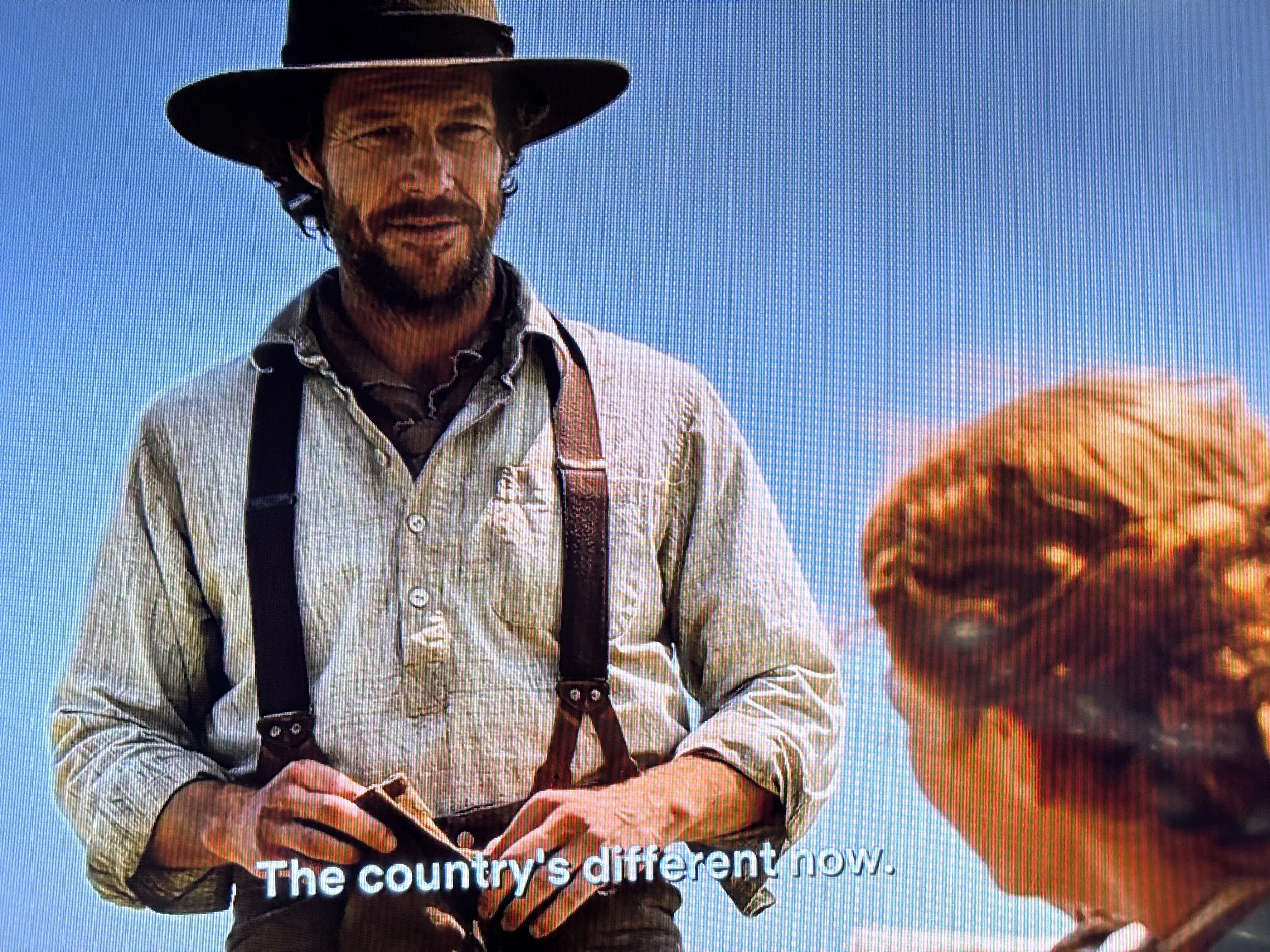
None of this means that Ma’s disdain (in the book) for their brown-skinned neighbors is left behind; in fact, it requires her feelings to have much more context. In “Independence,” this is represented in Laura and Ma’s first exchange about Indians (with Pa joining halfway through).
We get Laura’s puzzlement, Ma’s sobering memories of the Dakota War of 1862 (“I’ve been through enough war… don’t need another one at my doorstep),” and ohhhh THAT LOOK she gives Pa when he attempts to dismiss it as “a long time ago.”
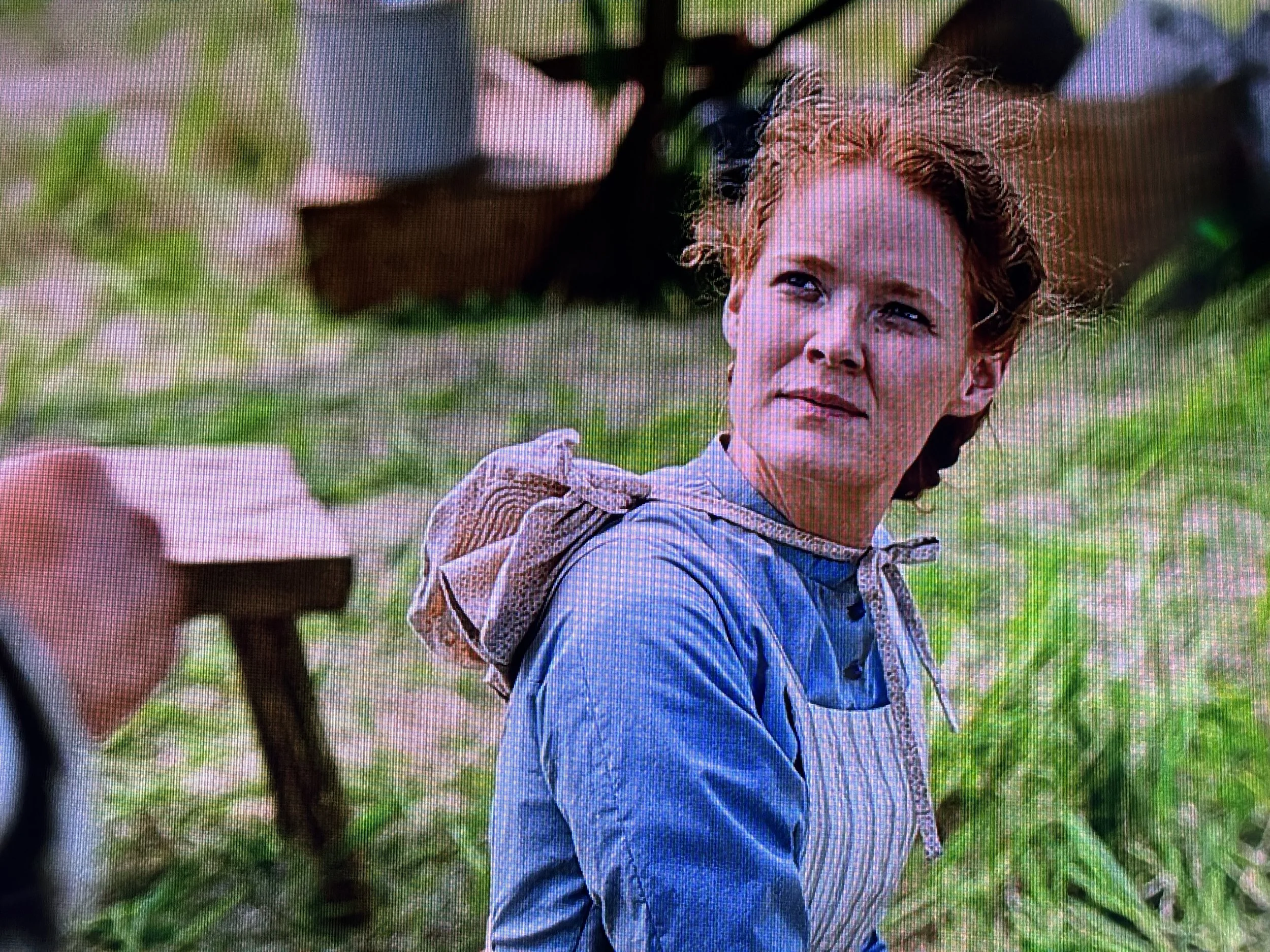
(Given that this version of LHOP begins in 1870, and the “long time” amounts to only eight years, it’s easy to get Ma’s point!)
No doubt about it, the lines are gently being drawn already for those in the family eager to befriend the Osage, and those who are not.
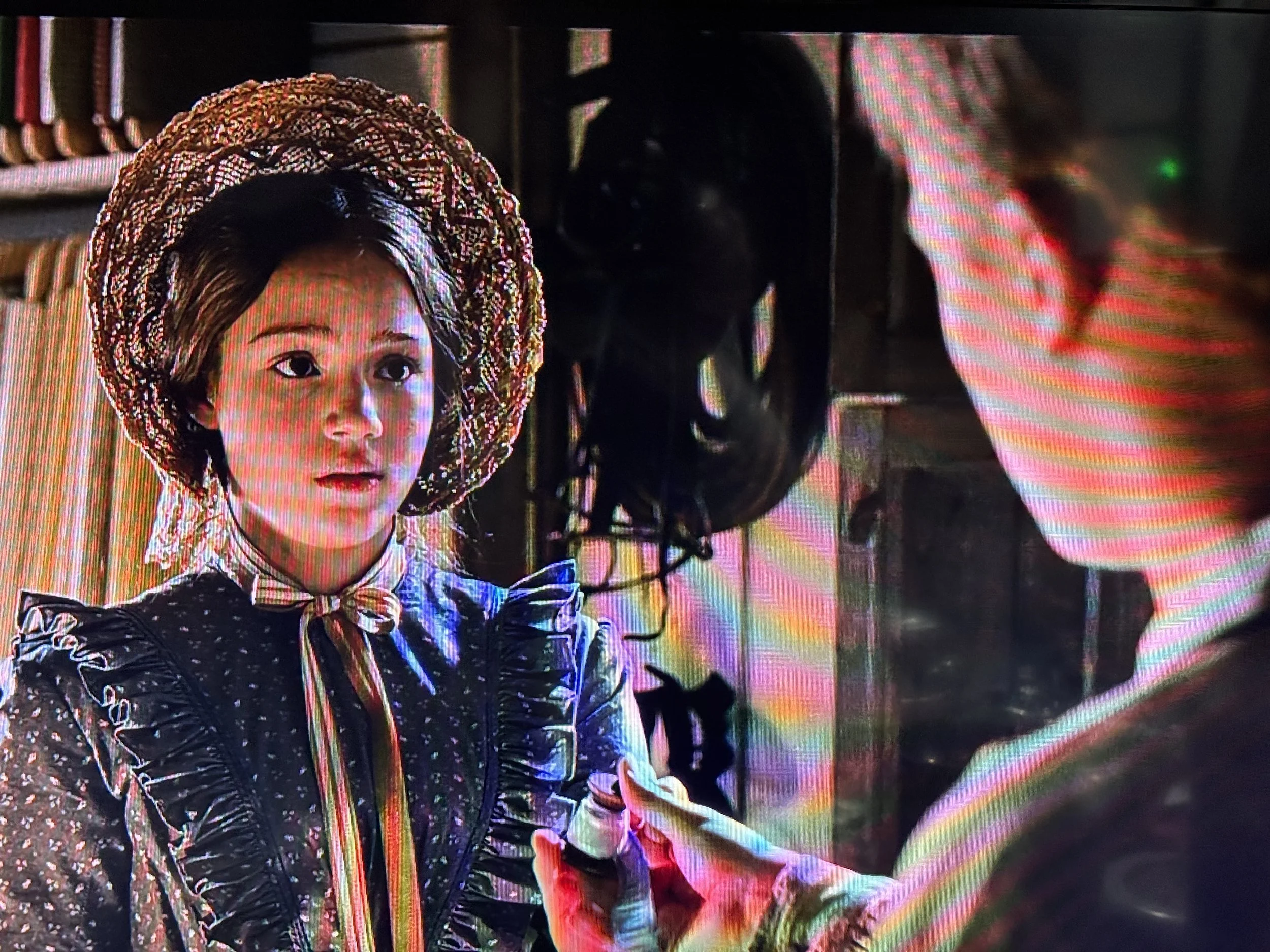
NEXT BEST– MARY AND HER LITTLE FRIEND
The televised LHOP (both the NBC version and this one) requires more than just Laura’s POV to keep things interesting. But how much of that shared story needs to go to older sister Mary?
She earns her place in the early books as Laura’s sometimes-role model, sometimes-foil, as older sisters do– especially when they’re annoyingly good at living up to their mother’s expectations. But what does Mary think about when no one’s watching?
The answer– at least in the Netflix version– is boys. Or boy. As in Caleb, the boy she (almost) literally runs into during the family’s first visit to Independence. I must admit, I wasn’t thrilled with the entire Laura/Mary exchange in the General Store (Mary mocking Laura’s intelligence? Laura shoving Mary? In public? With Ma presumably within earshot, yet she never intervenes? No way).
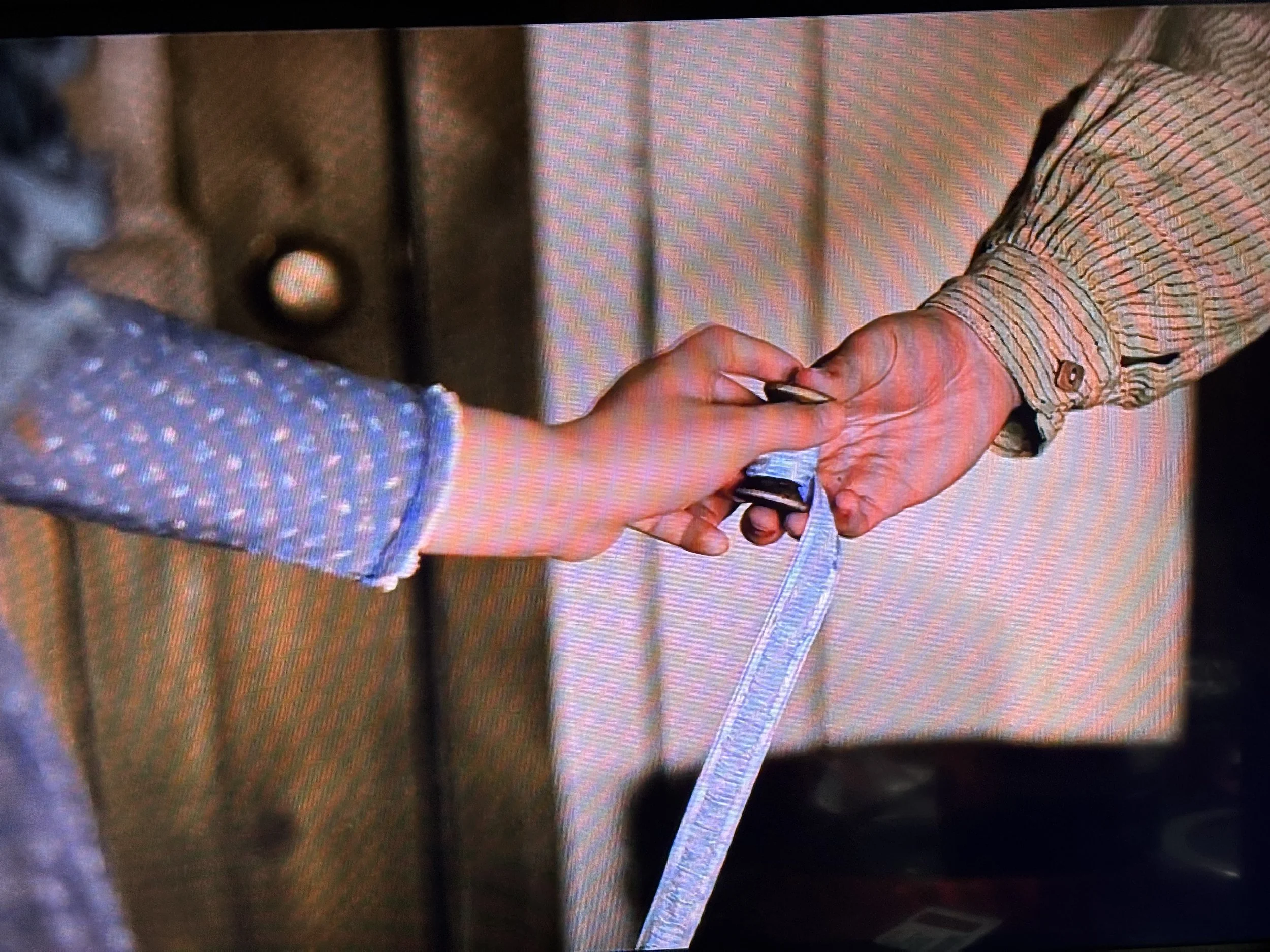
But as unlikely as that part felt, I admittedly was charmed by the whole thing with the hair ribbons. It was one of several times Sonnenshine took a memorable detail of the book series– Laura and Mary’s ribbons, which were pink and blue respectively to match their best dresses– and tied them (no pun intended) to an all-new story element.
And I’ll give them bonus points for having Mary parrot Ma’s belief that the ribbons help them maintain a sense of civilization “even in the middle of nowhere”... although the ribbons were first mentioned in a later book (On the Banks of Plum Creek), not in LHOP.
PRETTY GOOD, BUT…
LAURA “THE STORYTELLER”
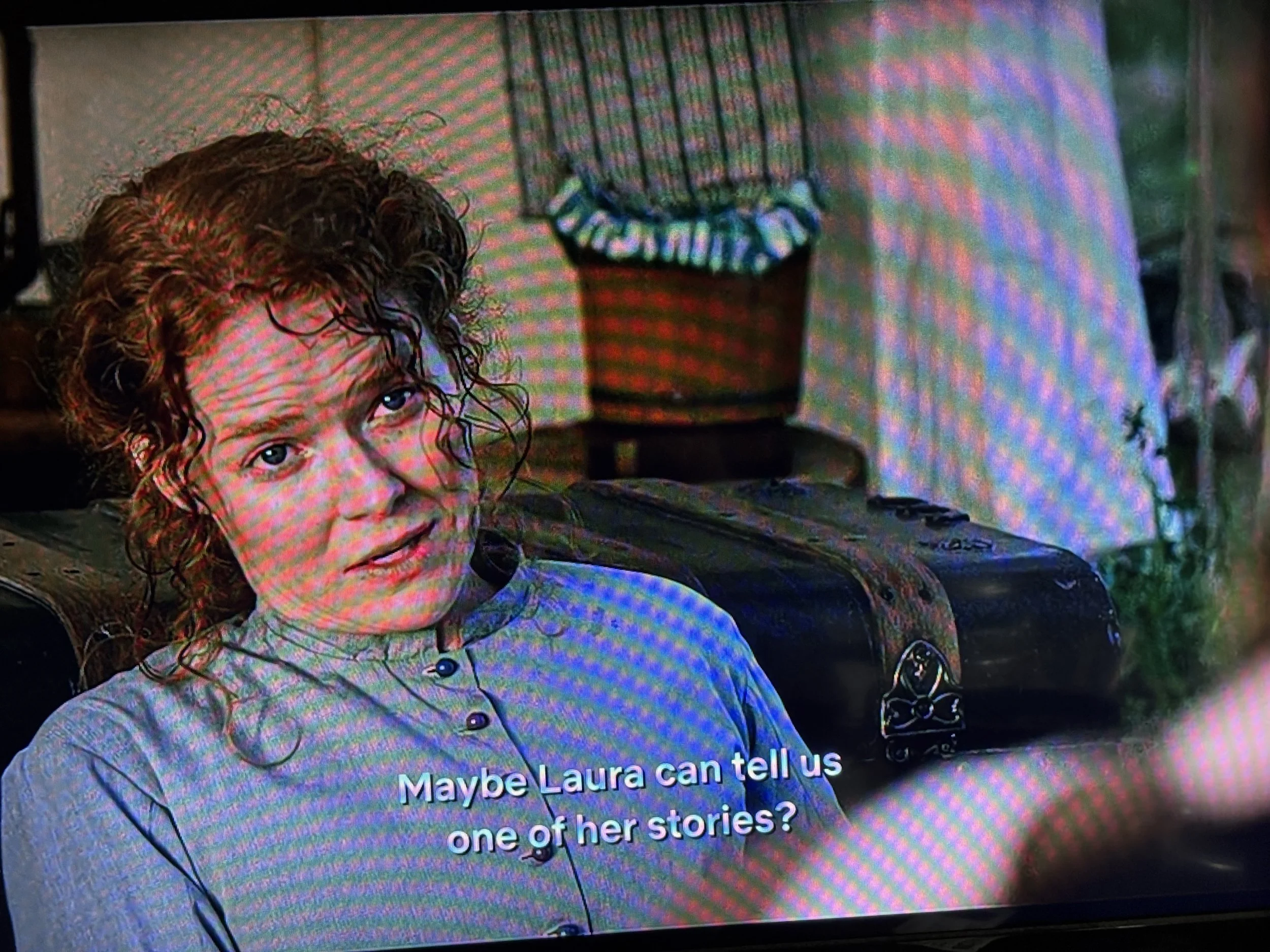
It started with Laura’s “Once upon a time…” at the very beginning of the episode, and picked up the thread later when she was encouraged by Ma and Mary to tell them “one of her stories” while Pa was away. The former is literally the way LHOP’s predecessor, Little House in the Big Woods, begins, so perhaps it was a nod to Wilder’s debut novel. The latter “story” is a recollection of the sugaring-off dance at Grandma’s house in Wisconsin, which is a highlight of Big Woods… and I, for one, thought it was great that they included it.
The problem with all that? Laura wasn’t the storyteller in the family. Pa was. In fact, it was Laura’s wish to preserve his stories that led her to write Big Woods.
I get it– it’s natural to want to portray Laura this way. The NBC version certainly embraced the idea by having Laura’s (Melissa Gilbert’s) voiceover in the beginning and/or end of many episodes. (Just how many times did Laura say If I had a remembrance book… anyway?) But it’s well-documented that Laura learned to “paint pictures with her words” when she started seeing the world for Mary, several years later.
For viewers unaware of that fact– and, especially, viewers so new to Laura Ingalls Wilder that they don’t yet know what led to Laura seeing the world for Mary– It probably plays just fine. If that’s you, let’s just forget we had this conversation… ok?
🌾🌾🌾
HEADSCRATCHERS…
HEADSCRATCHER #1: NOT EVEN WANDERLUSTY PA WOULD DO THAT
In the book, the Ingalls family is all together, in the covered wagon, when Pa stops the horses and declares that they’ve found the land on which he’ll build the new house.
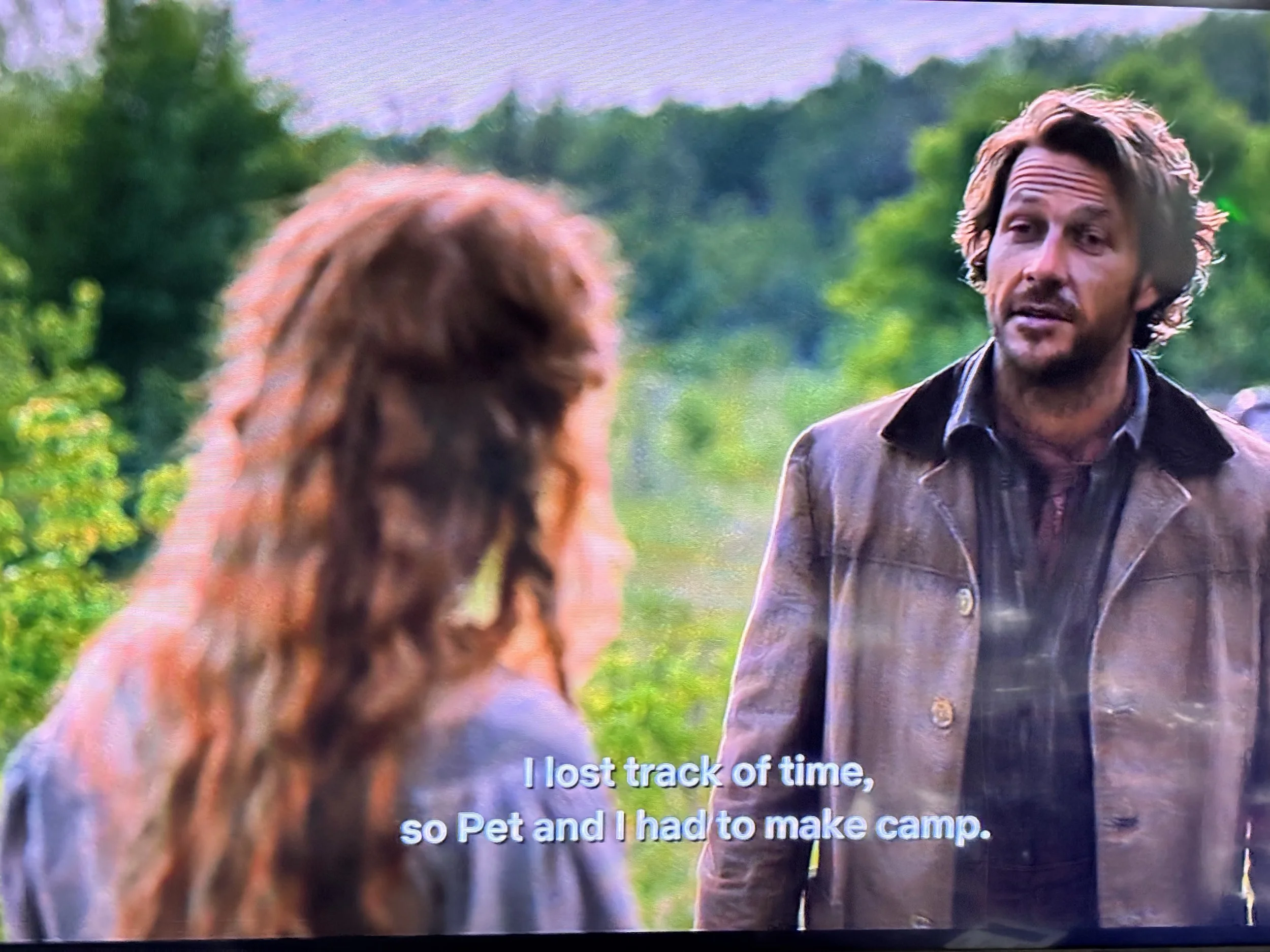
But in the “Independence” episode, Pa seeks out that piece of land alone, on horseback, with just his knife for protection, leaving Ma and the girls behind at camp. And then “loses track of time” and doesn’t return to camp that evening, requiring Ma to stay up all night with the rifle ready to go… in an unfamiliar part of the country… where she and her daughters (and NO watchdog at the time) only have the thin canvas of their tent to protect them from wolves, panthers, and other threats.
Seriously??
Sorry, but this part felt all kinds of contrived… and why? So we could see how frustrated and angry Caroline can be with her husband? So his reveal of the homesite felt like a poignant balm for her ruffled feathers? Nah… not necessary. There were enough minor clashes between the two of them in this first episode to make it clear that both of Laura and Mary’s parents are spirited souls in this version of LHOP.
Speaking of which…
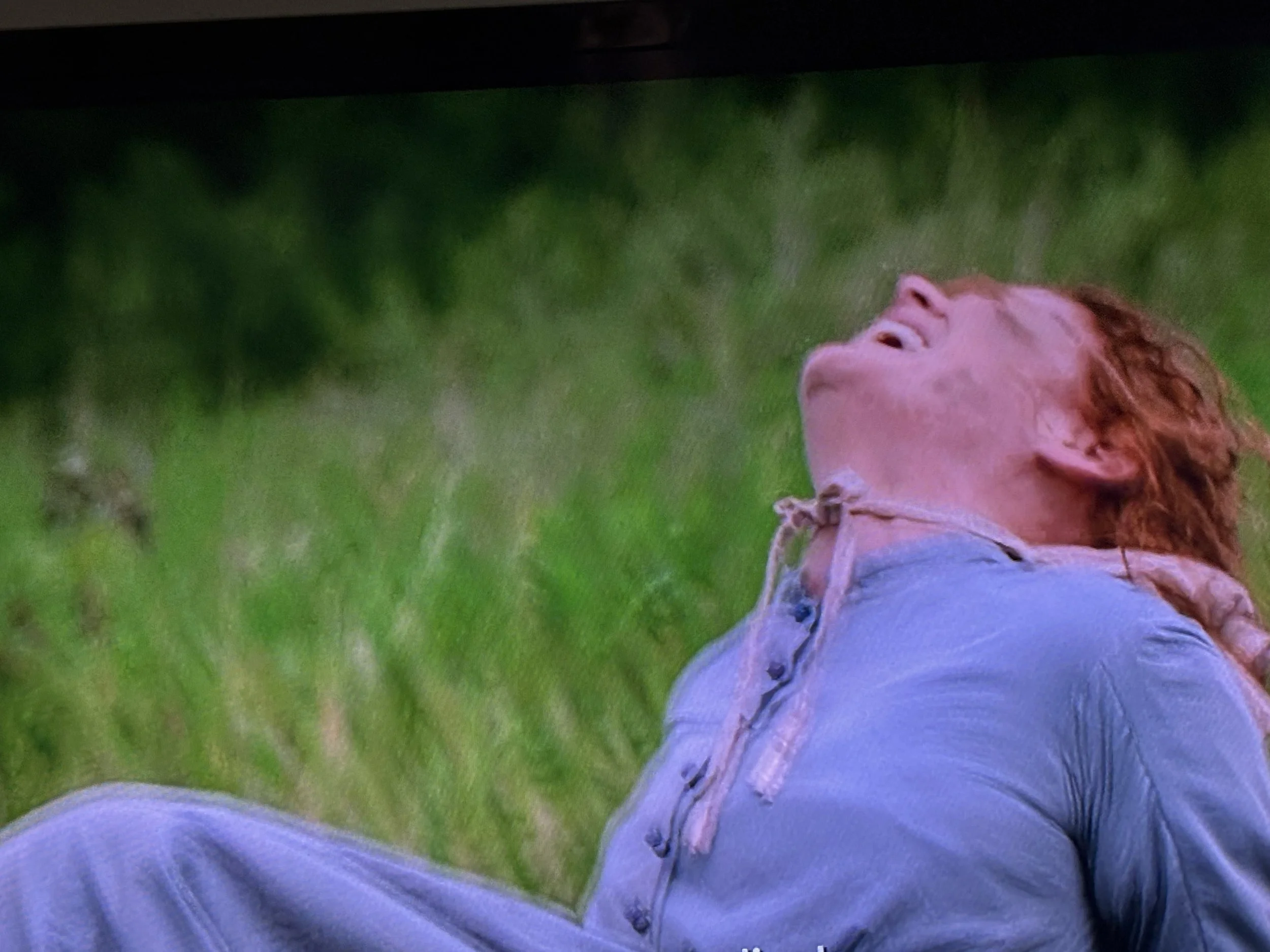
HEADSCRATCHER #2 (sort of): MA? YOU OK?
“Make your own breakfast!” Caroline snapped at Charles when he returned to camp in the “lost track of time” scene… as viewers like me said Wait, what?
But this exchange and a few others in “Independence” make it clear that this adaptation of LHOP delivers a somewhat different “Ma” than we’ve seen or read of before. This one is far less likely to deliver a cheerful “All’s well that ends well” at the end of a harrowing experience because she’s too busy staring daggers into Pa to say a word.
Except Make your own breakfast, which is four words… and four pretty contemporary-sounding words at that. For those who say Netflix Ma doesn’t always act or sound like the 19th-century wife and mother we’ve come to expect, I get where you’re coming from. But by the end of this first episode’s 50+ minutes, the vision of Sonnenshine was clear… and the message was If we’re gonna tell this story in the 21st Century, we’ve got to tell it with more enlightenment.
Consequently, the Osage side of the story already hints at being told in unflinching historical tones… the ups and downs of Charles’ “restless dreamer” persona are on full display… and yes, Caroline has a louder voice– both figuratively and literally– representing what many of us are thinking as the story unfolds. So “make your own breakfast” may sound like a surly one-liner worthy of a 90s sitcom, but in Netflix LHOP context, it’s consistent with the overall vision.
(I’m down with that. And if you’ve read this far, I’m guessing you are as well.)
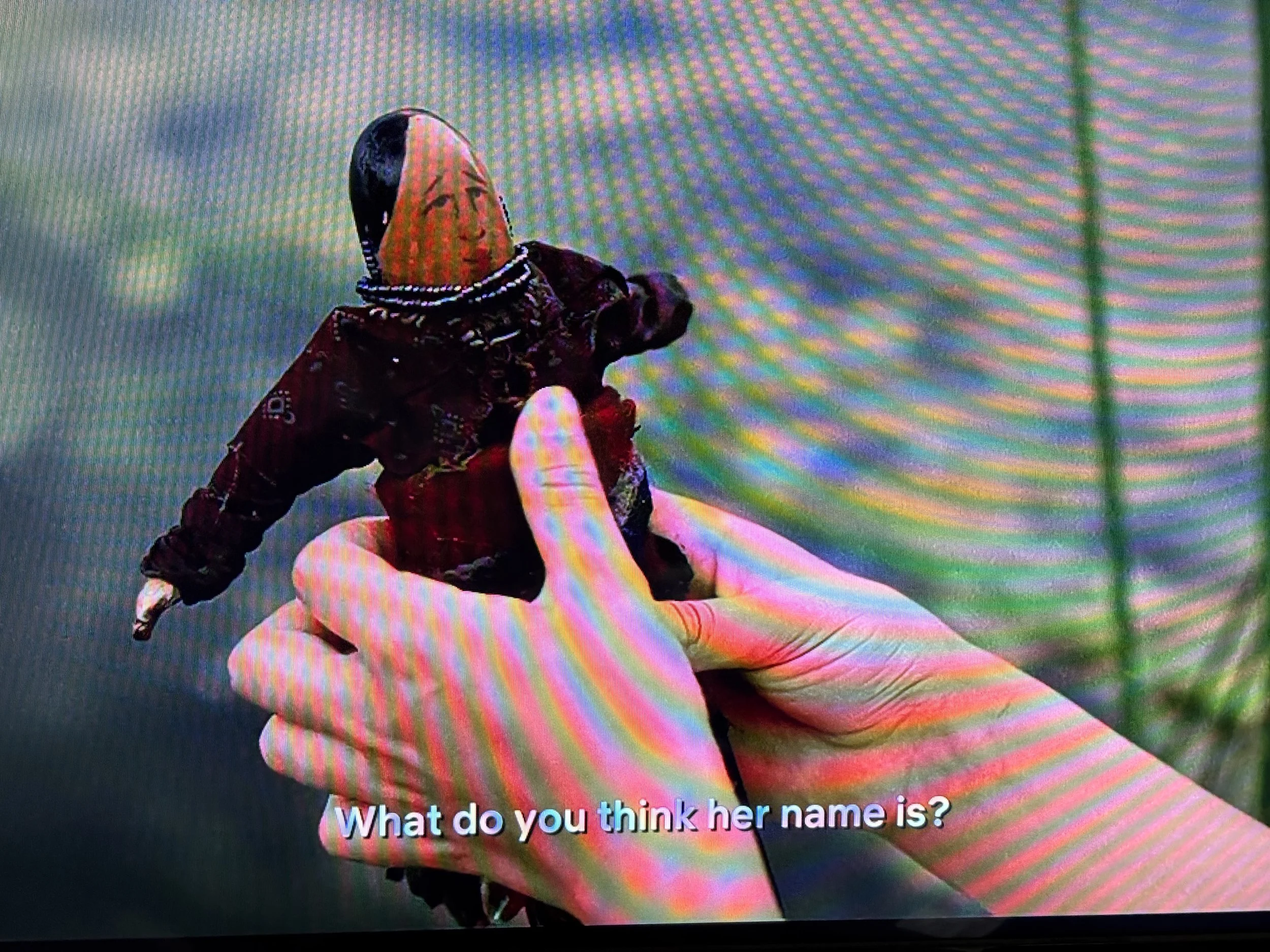
HEADSCRATCHER #3: WHAT, NO CHARLOTTE?
If you read the book series, you’re likely to remember a beloved rag doll of Laura’s that made its first appearance in Little House in the Big Woods and was also featured prominently in On The Banks of Plum Creek. If memory serves, the doll was finally packed in with Laura’s belongings at the end of These Happy Golden Years, indicating it stayed with Laura throughout her childhood.
When Netflix LHOP showed Laura discovering a doll on the riverbanks that turns out to belong to Good Eagle, I fully expected to either see Charlotte or hear about her as a way for Laura to show a commonality between the young girls. What a simple, sweet nod to the original text that would be!
Except Charlotte doesn’t exist– not in the “Independence” episode, at least. There are no lines like
“Can I keep her, Ma? She can be Charlotte’s new friend!”
Or (To Good Eagle) “I have a doll too… her name is Charlotte… I wouldn’t want to lose her, either.”
Or Laura holding the two dolls side by side– a simple, effective way to show a parallel between young girls with different skin tones.
Maybe Sonnenshine & Co. thought the importance of Good Eagle’s doll would be diluted if Laura already had one– but that seems a silly argument, especially when readers of the series know better. There’s plenty of time to “recognize” Charlotte as the show progresses, of course, but for now? It feels like a wasted opportunity.
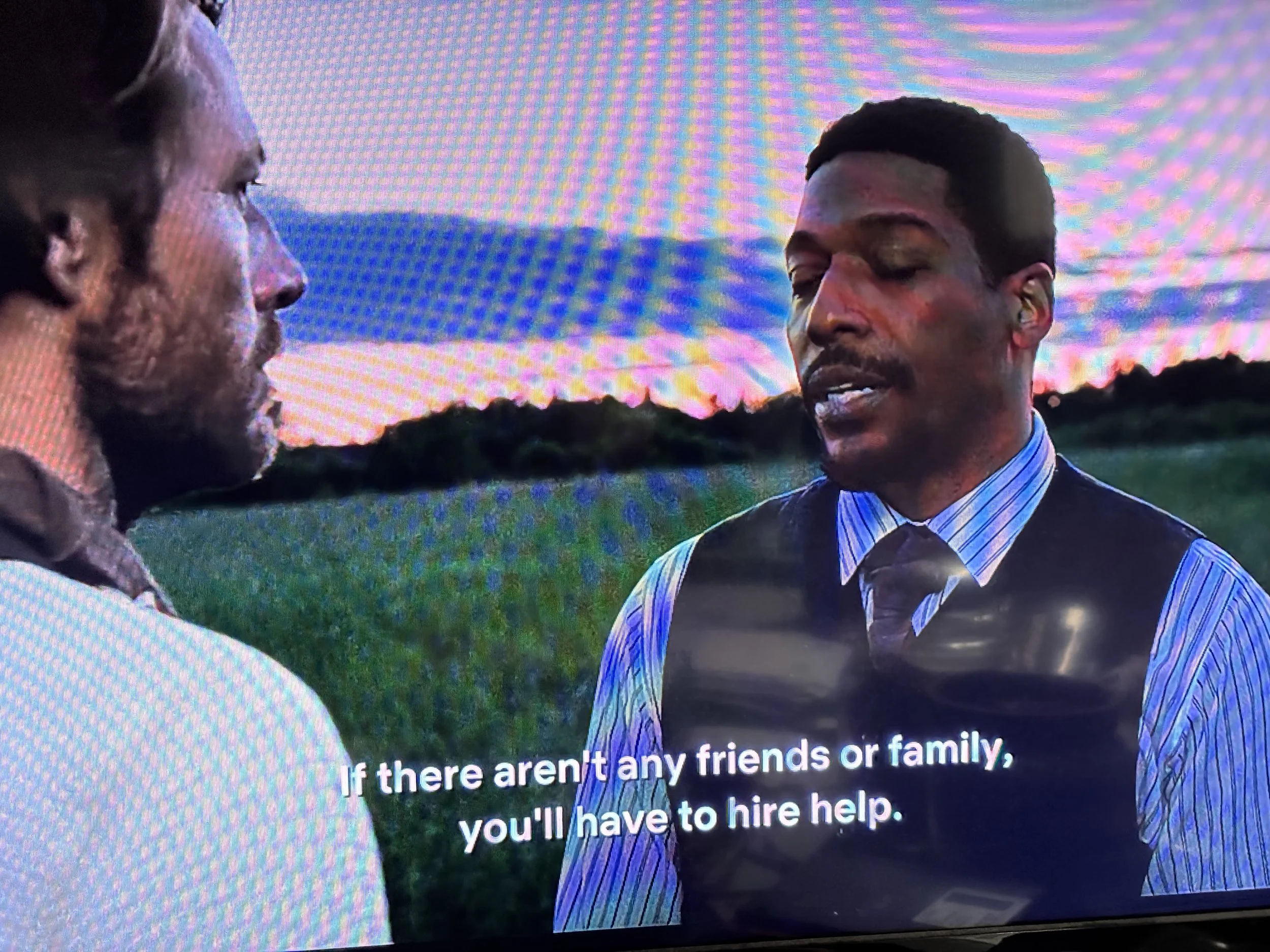
HEADSCRATCHER #4: INTEGRATING DR. TANN
Yes, the Dr. Tann in the Netflix LHOP was featured in the book and existed in real life. In the book, he saves the Ingalls family’s lives when they all come down with malaria in the “Fever’n’Ague” chapter. He may have done the same in real life, but he’s also the doctor who helped bring Carrie into the world. So his importance in Ingalls lore is indisputable.
Think about his introduction in this episode, though. If he’d just shown up on horseback after the near-disastrous creek crossing, and asked to take a look at Caroline’s bleeding hand… a stranger, AND a man of color… would she have allowed him to touch her, much less treat her?
I think it’s a fair question. Caroline’s disdain for Indians (Native Americans) is, like it or not, a recurring theme in the LHOP text. Are we to believe that since Dr. Tann dressed and spoke like white men with whom she’d been acquainted, she instantly gave her stamp of approval?
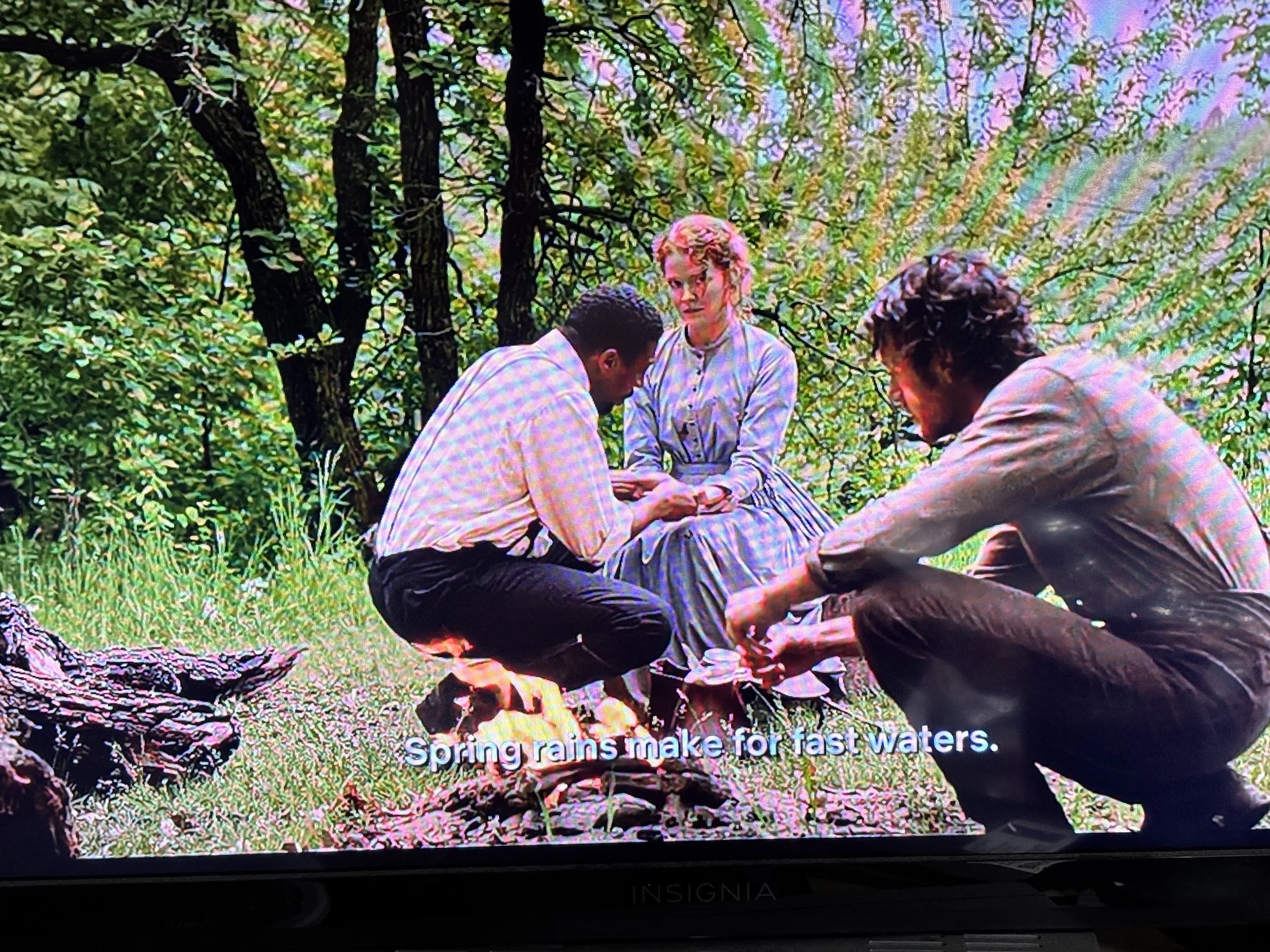
Technically, we don’t know her immediate reaction. We see Tann’s approach, we hear his request, see Caroline’s face briefly… and the next shot takes place later, post-treatment, as Tann converses with her and Charles. It’s a clever sidestep on Sonnenshine’s part– and, given that Tann shows up twice in this first episode alone– a necessary one.
But if I scratch my head over this one too long, I’ll start asking other questions: How did the Ingalls Family pay Dr. Tann for his services when they had so few resources to their name? Was the drive-by at the riverbank a “welcome to the neighborhood” freebie? What about his “house call” (more like a tent call) when the log thundered down on Ma’s foot?
So I might as well move on…
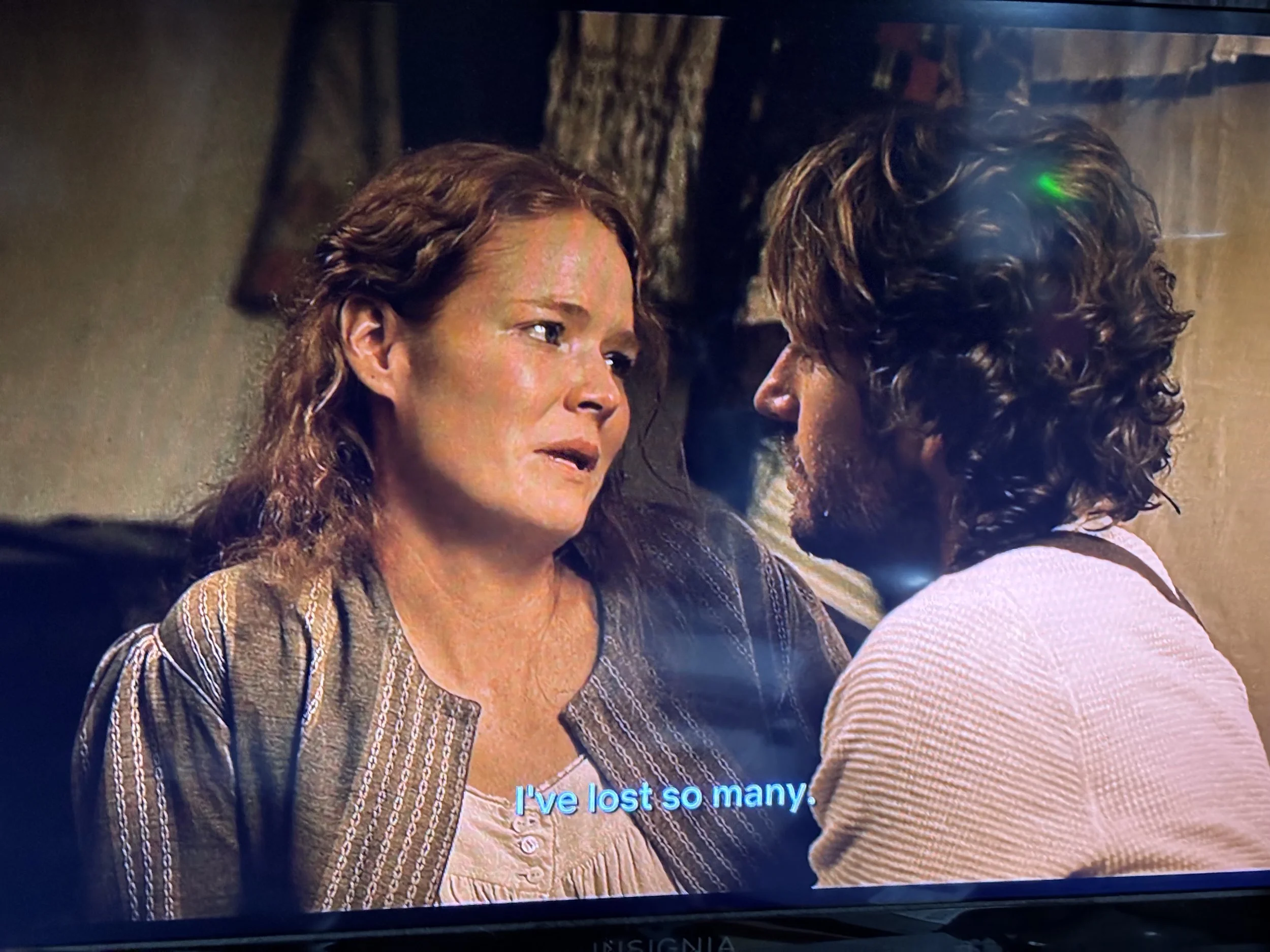
HEADSCRATCHER #5: MISCARRIAGES?
In the episode, Charles and Caroline’s first conversation about her newly revealed pregnancy has her sharing fears of a possible miscarriage… “I’ve lost so many,” she tearfully reminds Charles. Enter the headscratch, even though I think I get why she said it.
Before I get to that, here are some needs-to-know (in case you don’t already):
In real life, the Ingalls raised four daughters: Mary (b. 1865), Laura (b. 1867), Carrie (b. 1870), and Grace (b. 1877). They also had a son– Freddie (b.1875)– who died before his first birthday.
In the Little House book series, Freddie does not exist… and “Baby” Carrie is present throughout both Big Woods and LHOP.
The specific events in the LHOP book seem to take place between 1873-74… while in real life, they took place between 1870-71.
There are several reasons why Wilder set LHOP so Laura and Mary are 6 and 8 years old, respectively, when the book begins (and Carrie’s role is simply “the baby”)... that’s a whole separate conversation, in fact. What’s important to know for the purposes of the Netflix LHOP is that Laura and Mary are about four years older than the book version, while Carrie is “on the way.” More on why I think they did that in a minute…
But first, let’s go back to Caroline saying “I’ve lost so many.” With 10-year-old Laura as the youngest in this version of the story, it appears a decade has gone by since “Ma” gave birth. So I think they included that line as a means of explaining the gap… an important detail, given that birth control options were mighty limited in the 1800s.
In reality, there was no such gap. So why make Laura and Mary so much older in the first place? My guess is that it’s a thoughtful effort towards both continuity and accuracy, should this version of LHOP go the distance. Laura’s portrayer, Alice Halsey, was 10 years old when they shot the first season. The second season is currently in production, which means she’ll be 11 for the On the Banks of Plum Creek installment. If the years to come follow suit, she’ll be 12 for By the Shores of Silver Lake, 13 for The Long Winter, 14 for Little Town on the Prairie, and 15 for These Happy Golden Years…
Given that all the books from By the Shores… through Golden Years progress without a lot of chronological gaps, Halsey’s age will match up to Laura’s “correct” age soon enough.
🌾🌾🌾
“Independence” runs about 53 minutes, but– to be completely honest– I felt like the series was in pretty capable hands only seven minutes into the episode. Here’s why.
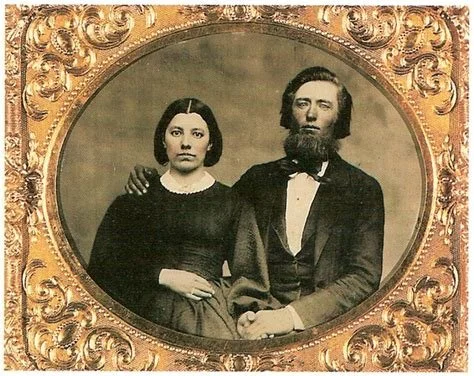
This is the real-life wedding photo of Charles and Caroline Ingalls from 1860…
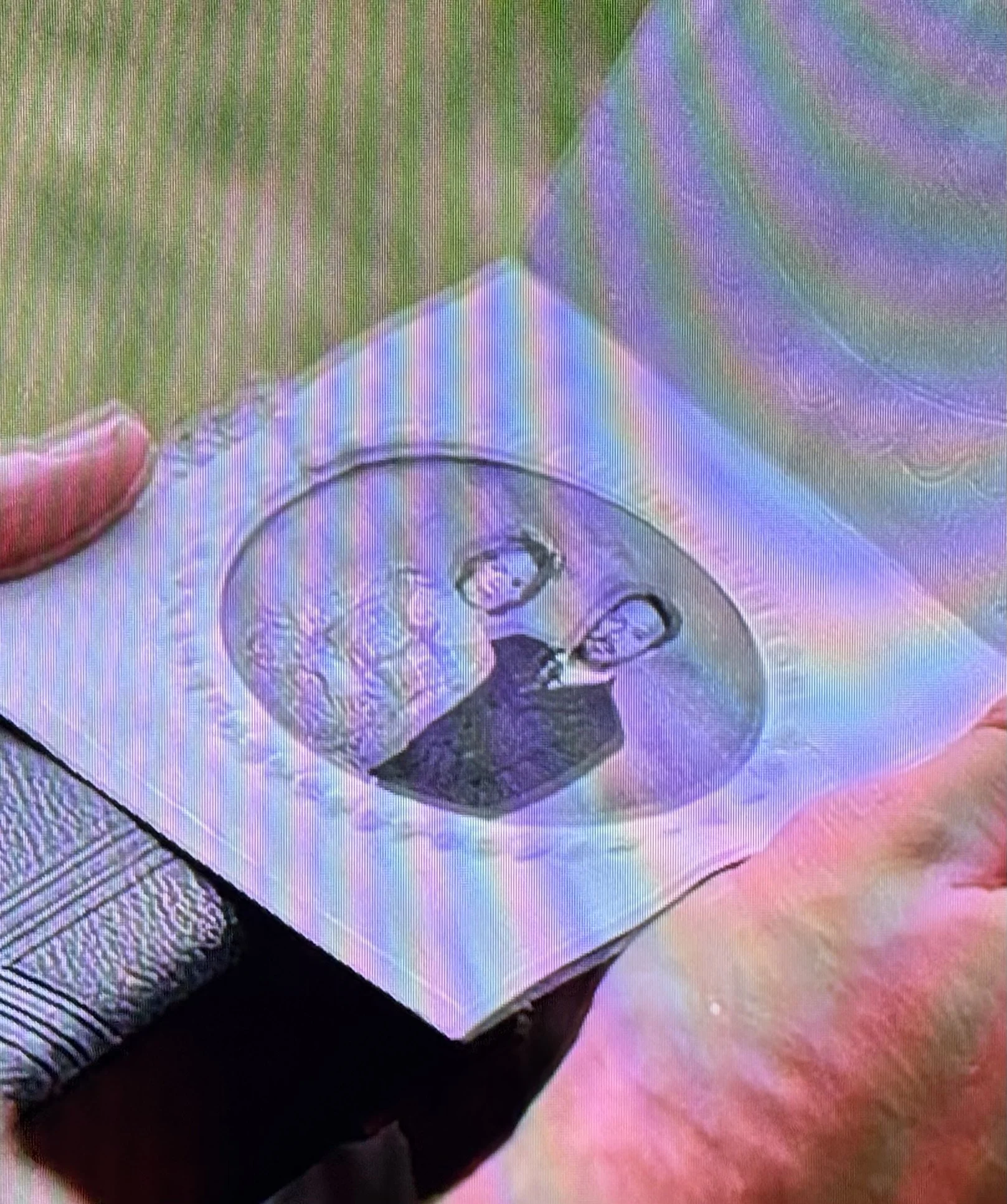
And this is the recreation of that photo, made for the Netflix series.
We only saw it for a few seconds– just after the perilous creek crossing, when Charles and Caroline are evaluating the damage and Charles comes across their family bible (where the photo is kept). When both the bible and the photo are seen to be free from water damage, their shared relief is palpable.
But think about that attention to detail– remaking a real-deal photograph for the sake of a few seconds of screen time! They could have easily alluded to a photo without seeing it, or skipped the reference altogether. They chose not to.
I look forward to writing about all the other “choices” to come in this adaptation of Little House. And I hope you’ll join me! I’m curious to know your thoughts as well.
(Whether you comment or not, I’m grateful you’re here. Thank you for reading!)
🌾🌾🌾