“Turandot” and “Tosca”: Puccini’s Skating Showcases
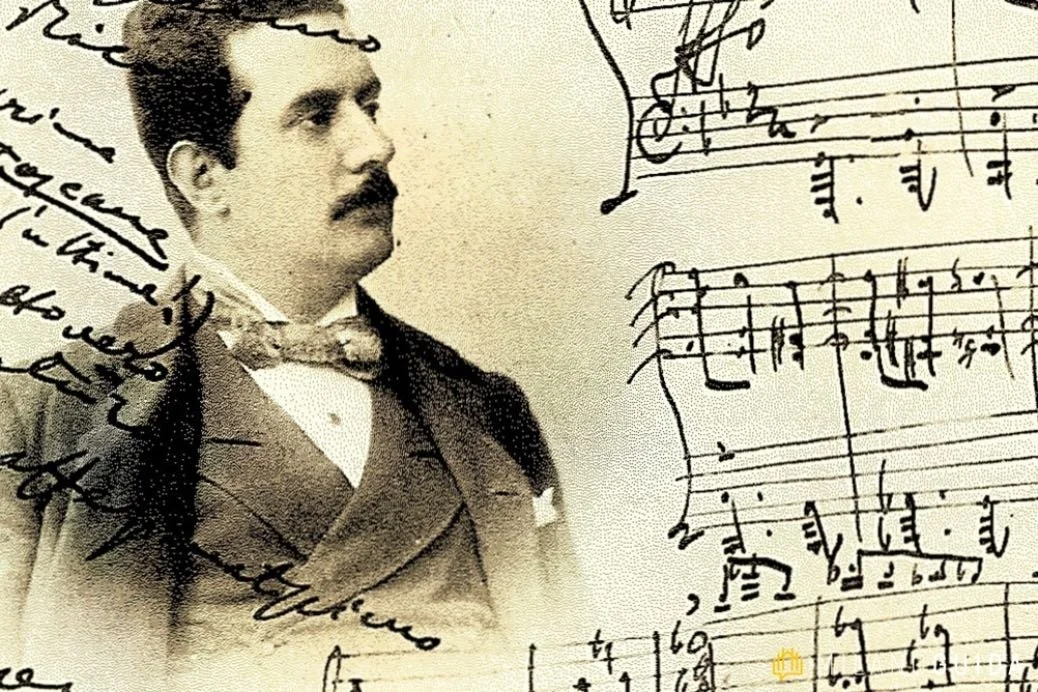
Giacomo Antonio Domenico Michele Secondo Maria Puccini
(1858-1924)
If you possess any amount of opera knowledge, you may find this look at Turandot and Tosca (as they relate to skating music) annoyingly simplistic. But I’m in constant learning mode when it comes to certain types of music, and opera is one of those types. Skating fans who mix up these two Puccini operas on the regular probably know what I mean.
Anyway-- with vocals or without, classic opera works have long been popular to skate to. Why? It’s the drama of it all: the powerful voices, the emotion that flows out of every note in the arrangement, and the inspiring over-the-top plot points. Big jumps and spins always have their place within such music; intense choreography and step sequences underscore it perfectly, helping the skater “become” Carmen and/or Don Jose… or Madame Butterfly and/or B.F. Pinkerton…
Or Princess Turandot and/or Calaf (for Turandot)…
Or Floria Tosca and/or Mario Cavaradossi (for Tosca).
TURANDOT
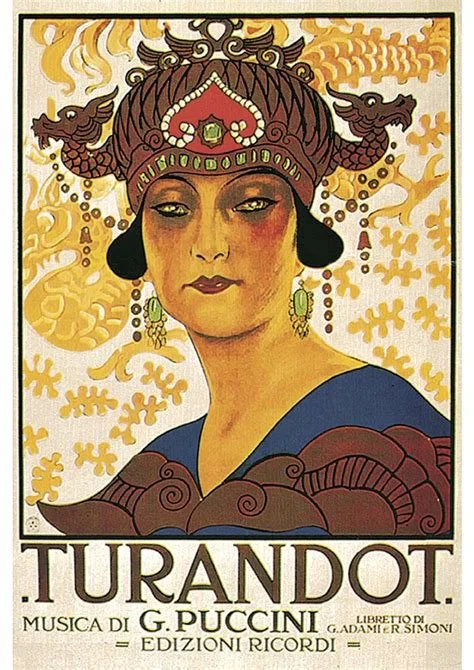
Could it be that Turandot is a skating favorite because the titular character is described as… an ICE PRINCESS???
(Cue the five powerful chords that start the opera that represent an axe falling)
Not exactly. But the very fact that the beautiful but cold, cruel Princess Turandot (pronounced with the hard “t” at the end) is often described as the exact opposite of every other Puccini heroine sets this– his final musical creation– apart from the rest of his work. He saw it as more of a musical fable than Tosca and others that dealt more with “real people.”
Nutshell descriptions of Turandot abound, whether you prefer a written version or audio/visual.
But here’s my even tinier nutshell version: (Contains spoilers!)
Turandot disposes of potential suitors by requiring them to answer difficult riddles. If they cannot solve them, they are beheaded. (Remember that axe…?)
One suitor– Calaf, the son of the deposed king of Tartary– falls for her at first sight and solves the riddles. When Turandot still balks at getting with the Prince of Tartary, he tells her he’ll leave if she can uncover his name.
Liu, a slave to the king who has unrequited love for Calaf, is tortured at Turandot’s command when she refuses to come forward with his name. (She eventually proclaims his name as “LOVE” and then commits suicide– the ultimate sacrifice.)
In the aftermath of Liu’s death, Calaf is both reproachful and loving to the Princess, ultimately kissing her in an effort to thaw her icy heart. “Thawing” takes a little time, but by the end of the opera, Turandot comes around… and even though she now knows his name, she declares it as “LOVE” to her emperor father.
Peace and joy radiate through the land, and the Prince and Princess live happily ever after.
NOTE: Since Puccini passed away before Turandot was completed, up-and-coming composer Franco Alfano was chosen to finish Puccini’s work (referencing the late composer’s sketches as he did so). According to this piece by The Opera 101: “An edited version of Alfano’s ending, which no one finds satisfactory, pretty much rules opera houses today.”
SO HOW DID TURANDOT BECOME EMBRACED BY FIGURE SKATING?
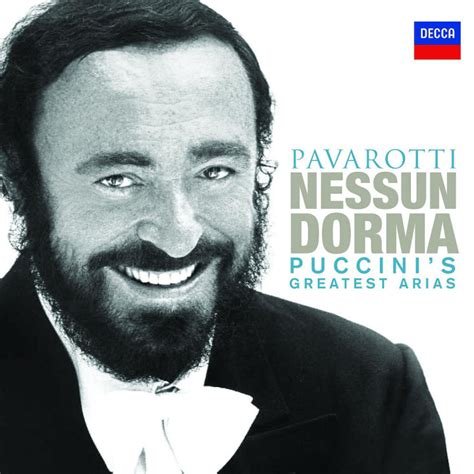
It’s an easy sell if you take note of the grand scale of the opera itself: Magnificent sets, giant gongs that play into the storyline, powerful choral passages… and it happens to be home to one of the best-known arias in the business. “Nessum Dorma” (Let No One Sleep), sung by Calaf, moved into the mainstream of popular music when Luciano Pavarotti’s 1972 recording became the theme song of the 1990 FIFA World Cup in Italy. It’s been adapted and performed in a multitude of ways since then, including both the 2006 and 2026 Winter Olympics (in Turin and Milano-Cortina, respectively).
“Nessum Dorma,” naturally, is what skaters and choreographers have gravitated to in the past few decades. According to the ever-wonderful Skate Guard Blog, the original performance of Turandot (featuring “Nessum Dorma”) was by top 5 U.S. athlete Erik Larson in the 1989-90 season.
And if you were a skating fan in the ‘90s, it was all but impossible to miss U.S. Pair Champions Jenni Meno and Todd Sand utilizing “Nessum Dorma” to their advantage multiple times– including their best finish at Worlds (a silver, in 1998) seen here:
In 1997, violinist Vanessa Mae released “Violin Fantasy on Puccini’s Turandot” – 11 minutes of her own arrangement of highlights (still featuring “Nessum Dorma,” of course) that has been the go-to for many a skater ever since.
Two favorite interpretations of the Vanessa Mae recording from the 2000s remain beloved 20+ years later. The first was from Chinese pair skaters Shen/Zhao, who won the first and second of their three world titles with it. This is the second, earned in Washington DC in 2003:
And in 2006, Shizuka Arakawa won the first OGM for any Japanese figure skater with Vanessa Mae’s “Fantasy.”
In the 2025-26 season, the skating world got to see and hear Turandot in a completely new way– featuring the FINALE of the opera, with “Nessum Dorma” only reprising at the end– when two-time Grammy-winning composer Christopher Tin became intricately involved with the free program of World and Olympic medalist Yuma Kagiyama.
Commentator Mark Hanretty explained the collaboration during coverage of the 2025 NHK Trophy:
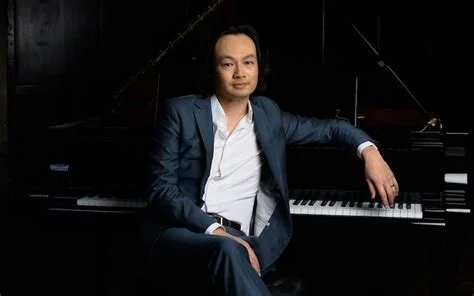
Photo Credit: Andy Wilkinson
It marks the 100th anniversary of Turandot since its debut premiere at La Scala. There was a new creation by Christopher Tin last year, and Yuma’s choreographer Lori Nichol, who’s just a master craftsman, considered then using that piece. Carolina Kostner… elected to reach out directly to the conductor Christopher Tin… and that sparked the creation of a piece specifically for Yuma.
Take a gander at this practice video of Kagiyama and you can get an even better sense of the storytelling, for English subtitles are provided throughout.
TOSCA
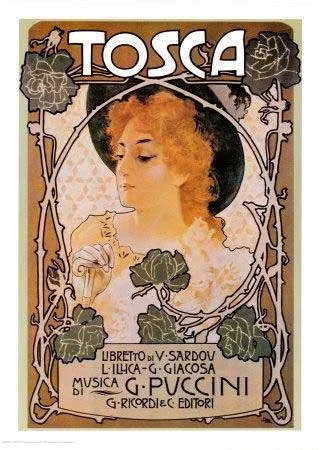
I found this summary-- literally called “Tosca in a Nutshell”-- that you might find interesting if you’d like to know the details of Tosca in a Cliff Notes kind of way.
For an even shorter version: I present the following needs-to-know: (Again…Contains spoilers!)
Tosca has a lover (Mario); that lover does something for a friend-in-trouble that gets HIM in trouble.
Tosca also has an admirer that is the chief of police; once Mario is under arrest, he tells Tosca if she’ll sleep with him, he’ll free Mario. Long story short, she gets what she wants for Mario and manages to murder her admirer before submitting to his advances.
Tosca and Mario make plans to flee before her admirer’s body is discovered, but then Mario is killed as well… leading a despairing Tosca to fling herself over a wall to her death.
Love, lust, separation, reunion, murder, suicide… who could ask for more?
When it comes to selecting just the right edit of Tosca to fill a four-minute free skate-- not sure I’ve ever seen it used for a short program-- the tried-and-true cuts tend to revolve around the ominous, haunting melody that comprises Mario’s aria "E lucevan le stelle" (“And the Stars Shone”) while he’s imprisoned, trying to compose a letter to Tosca but overwhelmed with memories of the two of them. The motif returns for his execution scene, and is played tutta forze (as loudly as possible) in the final bars as Tosca takes her own life… those final bars being the way every Tosca skate I can think of has ended, naturally!
Here’s how it looks on stage:
There have been countless Tosca programs through the years. By the time Michelle Kwan took it on in the 2003-4 season, she was at a stage in her storied skating career where she was using classics rather than deliberately avoiding them in favor of more unique options. And with Tosca, she chose to use the best-known motifs throughout the program, starting with what sounds like the end of the opera but fading out of the final notes… kind of like a movie that starts with an immediately intense scene, then restarts with the graphic “2 days earlier…” up on the screen:
Two years earlier, Russia’s Irina Slutskaya won her first World title with a Tosca free skate. In her version, the first minute is a less recognizable part of "E lucevan le stelle" (“And the Stars Shone”) before delivering the main motifs for the rest of the program. (And if you watch Slutskaya’s final, climactic, multi-positioned spin at 4:45 in this clip, you may notice a few bars of the music repeated an extra time or two… if I’m right about that, it must have been done to give her enough time to complete said spin and do all the final choreo flourishes at the end.
When USA’s Belbin/Agosto used Tosca for their 2008-9 season, the focus was on "E lucevan le stelle" to start, but with the vocals included… something singles skaters weren’t able to do for several more years. If you go to the ending on this one (4:25), you’ll see it ends with choreo that is pretty well suited for Tosca’s final moments (if you overlook the fact that Mario couldn’t have been holding Tosca at the end)… but, admittedly, impossible to pull off if you’re skating Tosca solo.
Which brings us to Japan’s 2015 World Silver Medalist Satoko Miyahara, who used Tosca for her free skate in her final two competitive seasons. What’s unique about Miyahara’s version is her usage of the titular character’s aria “Vissi d’Arte” (“I lived for art, I lived for love”) for the first two minutes. It’s what Tosca sings mournfully when faced with the choice of complying with her admirer’s demands for the sake of her lover Mario’s life… an interesting way, I think, to set the stage as she tells the rest of the story: